


They change the way they click. Not just louder, not just faster. Something deeper.
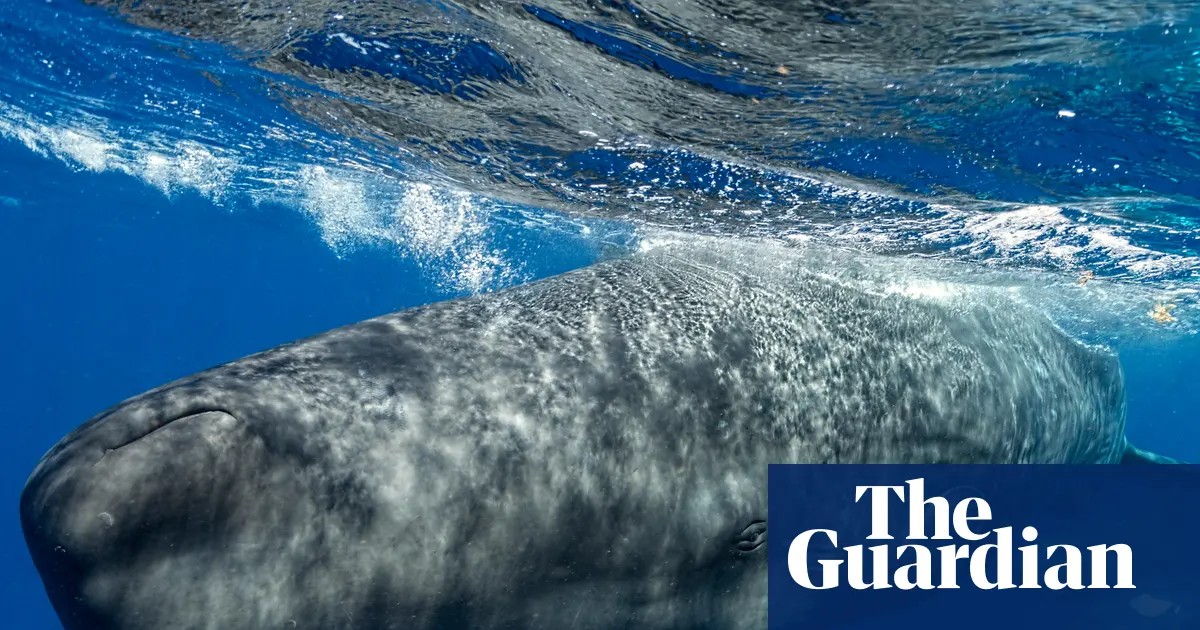
Sperm whales off the coast of Dominica alter their specific communication patterns when boats drift nearby. The shift is so distinct, so mathematically clear in the data, that researchers can now look at a recording of clicks and tell you with high confidence whether a ship is in the background. It is a new kind of acoustic alarm.
This wasn’t a quick survey. Researchers from Project Ceti—the Cetacean Translation Initiative—spent four years listening. They tracked 15 whales. They attached non-invasive audio tags via drone, a clever workaround for studying giants that spend most of their lives deep in the ocean. The result is a paper published in Ecological Informatics that challenges how we think whale language works under pressure.
Decoding the 1-1-3 coda
To understand the change, you have to understand the baseline. Under normal conditions, quiet conditions, one whale in the pod named “Atwood” produced a specific coda. A coda is a discrete pattern of clicks. Atwood’s version was a 1-1-3 rhythm. Two clicks. A pause. Then three faster clicks. This specific cadence is unique to this clan of sperm whales in the Caribbean waters near Dominica.
It is their signature. Their ID.
Then the ship engines started.
The background hum of machinery didn’t just mask the whale’s voice. It changed the voice itself. Atwood kept the 1-1-3 structure, yes. But the intervals shrank. The clicks came closer together. The tempo increased.
“This research begs the question: are whales talking about the ships, or an impact on their voices because ships are around?”
David Gruber, founder and chief executive of Project Ceti, frames the dilemma perfectly. It is a semantic loop. Did they change their language to describe the threat? Or did the noise physically alter their vocal apparatus? Either way, the output is different.
Gašper Begus, the linguistics lead at the organization, notes that the correlation was strong. “From their vocalisations alone, we can predictWhether ships are around,” he says. They analyzed more than 1,00 codas. They verified the ship presence using digital geolocation data. The link between the sound change and the vessel was not coincidental. It was consistent.
Beyond the Lombard Effect
Most studies on marine animals and noise pollution focus on volume. The Lombard Effect. When it gets loud, you turn up your voice. Humans do it. Birds do it. Marine mammals are supposed to do it.
These sperm whales didn’t. Not primarily.
Instead of just getting louder, they shifted the type of codas they produced. They altered the fine-scale content. This nuance marks a departure from the standard narrative. Underwater noise doesn’t just drown out the message; it distorts the syntax.
This connects back to Project Ceti’s previous work on “vowels.” Sperm whale communication is often compared to Morse code. A series of dots and dashes. But if you speed up the gaps between the clicks in a coda, something else emerges. The sound coalesces into a continuous unit. It resembles human vowels. Specifically, the “aaaa” and “iiii” sounds.
In noisy conditions, the whales changed the ratio of these sounds. They used the “aaaa” coda more frequently.
Are they saying something new?
This leads to the core mystery. If the “vowels” are meaningful units of information, then changing them changes the message.
“The study is actually one of the first glimpsles that the vowels that we discovered might actual carry meaningful information,” Begus explains. “Because in the presence of shipping noise, thay change the way they use those vowels.”
Or are they struggling to articulate the same information through an acoustic filter of their own making? The data shows the change. The intent remains speculative.
The scientific community isn’t entirely on board with the terminology yet. Some critics argue that terms like “vowels” and “language” stretch the analogy between human speech and whale clicks too far. Anthropomorphism is a dangerous trap in zoology.
Gruber acknowledges this. Project Ceti tries to walk the line by using qualifiers: “vowel-like” or “language-like.” It is a linguistic hedge. A way to stay grounded while exploring provocative ideas.
Nathan Merchant, an underwater noise specialist who was not involved in the study, sees the data but cautions against jumping to conclusions. Unknown factors could be driving the vocal shift. Other environmental stressors. Prey availability. Social dynamics.
But Merchant’s “hunch” leans toward causality. “Something that marks this study out is it shows changes to the fine-scale content,” Merchant notes. It adds another layer of nuance to how underwater noise affects cetaceans. It isn’t just volume. It’s structure.
It’s time to ask the harder question.
Are these whales just struggling to be heard? Or are they adapting their dialect in real-time, negotiating a new acoustic reality with every click?
It is a really intriguing question. One we don’t have a clear answer for yet.


