The Backyard Hunt
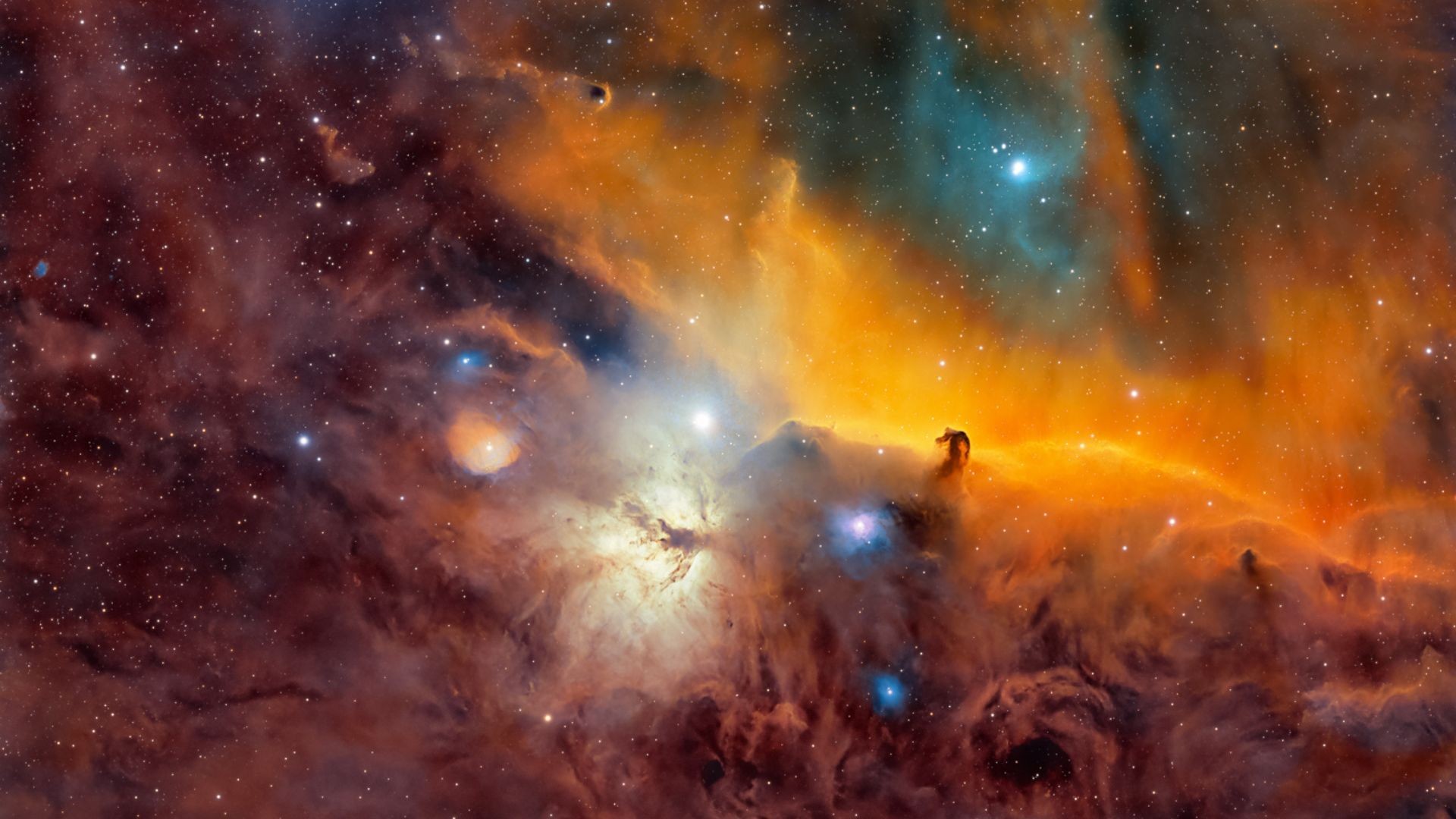
It took Greg Meyer one hundred fifteen hours. That’s how long he spent staring up at the dark dust cloud 1,600 light years away. He didn’t use a space telescope. No Hubble. No Webb. Just a backyard rig in Phoenix, Arizona.
Orion was shining above him from November 2025 through March 2026.
He used a Radian Raptor 154mm telescope (wait, let’s stick to the facts—actually a 61mm Radian Raptor paired with an astronomy camera). It’s not the most powerful hardware on the planet, but it caught what he wanted.
“I really started going down a rabbit hole.”
Light and Dark
The Horsehead Nebula is named for that obvious reason. A silhouette. Dark opaque dust backlit by glowing hydrogen. That gas is energized by ultraviolet radiation from nearby stars.
But the nebula isn’t just a horse. Look harder, really look at the data from Spitzer or Hubble, and the shape falls apart. The familiar equine head disappears. It looks alien. New.
In Meyer’s frame, however, the horse remains.
To its left, the Flame Nebula (NGC 2022) burns bright. Illuminated by Alnitak. That’s the eastern star in Orion’s Belt. And there’s Alnilam up top left. Blue-white glow. The hunter’s middle star.
Processing the Noise
He didn’t just press a button and walk away.
Meyer stacked over 115 hours worth of image data. Then came the software. PixInsight. Adobe Photoshop. Lightroom.
He wanted different hues. Not the standard look. He blended color palettes until the complements felt right. A rabbit hole of adjustment.
Why spend a hundred hours for a patch of gas and dust?
Because the universe is far away. Because we have the time to wait for the photons.
Most of us look at the sky and see empty black. Meyer sees a palette. He sees hours he can burn through just to capture one specific shade of infrared red.
You want to do it yourself? There are guides out there. Beginner tips for the Milky Way. Camera roundups. Lens advice.
Pick up a scope. Wait it out. The stars don’t rush.