


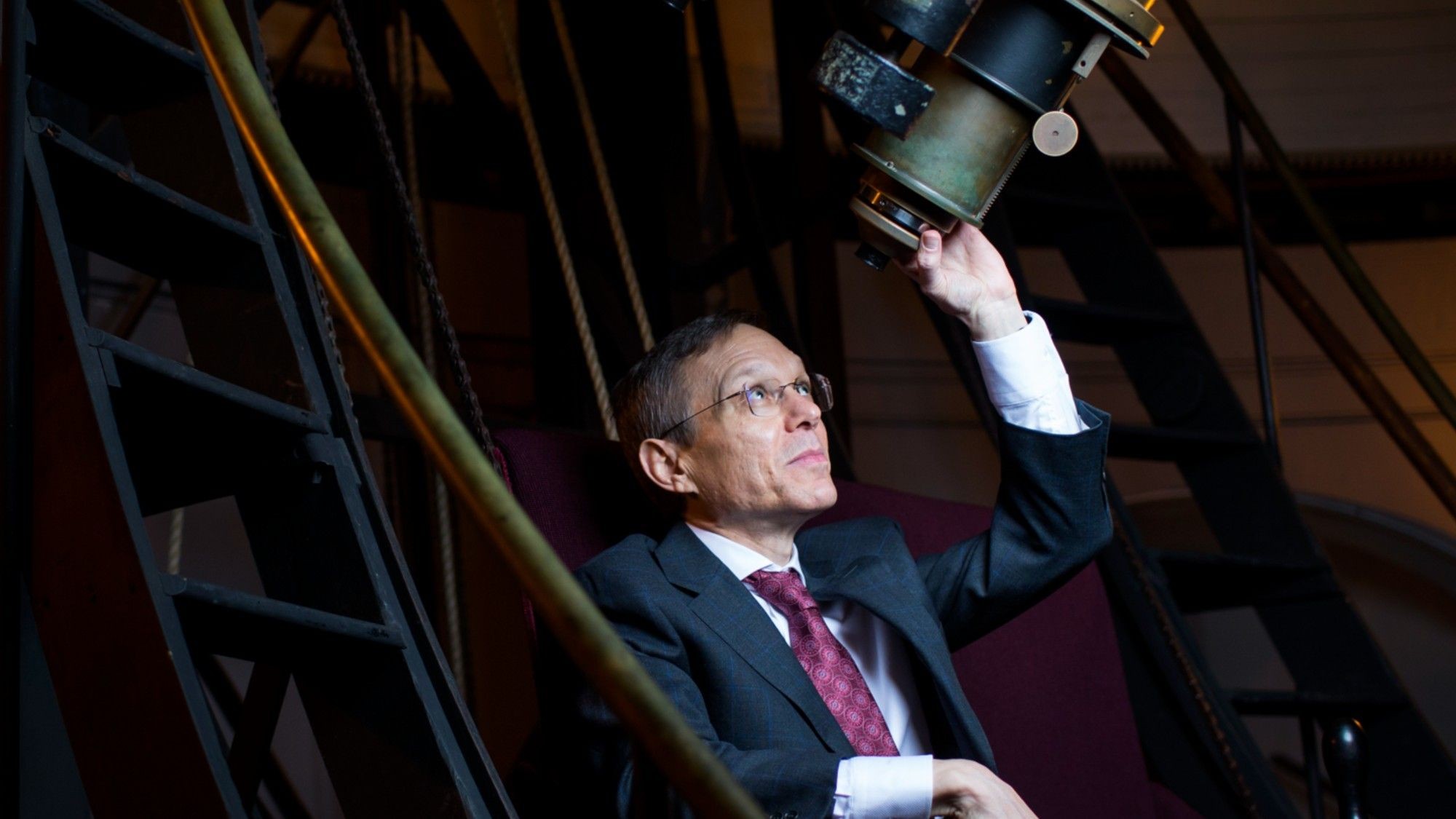
Harvard astrophysicist Avi Loeb has landed the helm of a new White House task force. Their charge? Study UAP —unidentified anomalous phenomena.
The term is broader now. It isn’t just sky-bound anymore. These objects might appear underwater, in space, or somewhere in between. Loeb says this group won’t be chasing ghosts. They care about evidence. Instrumentation. Data collection standards.
This follows the Trump administration’s push for more transparency on UFOs. The UAP Science Advisory Council is a joint effort. The White House built it. The Pentagon’s All-Domain Anomaly_resolution Office (AARO) helped. So did the Office of the Director of Nationalelligence (ODNI), the FBI, and other intel community players.
Loeb already leads the Galileo Project. It’s his way of pulling extraterrestrial technology searches out of the legend pile and into hard science. Systematic. Transparent. Validated.
“From accidental or anecdotal observations to mainstream research.”
As chair, Loeb claims he has an A-team.
The Crew
The team isn’t just astrophysicists. It’s a mesh of disciplines. Biology. Oceanography. Anthropology. Psychology. Even data science.
Their goal is specific. Help government agencies use rigorous science to understand UAPs. No more relitigating old cases where data can’t be verified. Higher-quality data now.
Who exactly is in this room?
- Liberty Capito – Data science professor at Washington University.
- Carol Cleland – Philosophy professor at CU Boulder.
- Richard Cloete – Harvard computer scientist, also on the Galileo Project.
- Omer Eldadi – Psychology researcher at Reichman University in Israel.
- Tim Gallaudet – Retired Navy admiral. Oceanographer.
- Dale Hanson – Associate professor of economics and stats at George Mason.
- Ross Howard – Podcast producer. Tied to the Sol Foundation, which prep-society for UAP implications.
- Kevin Knuth – Physics professor at UAlbany.
- Ben Lamm – CEO of Colossal Biosciences. De-extinction guy.
- Devesh Nandal – Astrophysics postdoc at Harvard/Smithsonian.
- Garry Nolan – Stanford pathology professor. Runs the board of the Sol Foundation..
- Michael Shermer – Founding publisher of Skeptic. Teaches critical thinking.
- Peter Skafish – Sociocultural anthropologist. Secretary for the Sol Foundation.
- Matthew Szydagis – Physics professor at UAlBany.
- Jennice Vilhauer – Clinical psychologist. Experts in the psychology of disclosure.
Hard Physics
Space.com asked some members how they feel about the approach.
Devesh Nandal said they are sticking to deep scientific principles.
“We approach this with the same rigor as our respective fields. We want unbiased analysis.”
Nandal’s job? Quantitative data. He brings astrophysics chops to figure out where these things are coming from.
His day job is stellar physics. The life and death of massive stars. But UAPs intrigue him too. Terrestrial or extraterrestrial doesn’t matter right now.
If the phenomena follow known physics, great. It lets him test the laws of nature.
If they don’t? Even better.
“A brilliant opportunity to learn about the Universe.”
Trust and Structure
Liberty Capito called Loeb one of the brilliant minds of the era.
She thinks the group’s mixed bag of views helps. It could rebuild public trust in science. People who disagree need to sit together.
Carol Cleland expects outside experts to pressure the government.
She wants more openness. She wants to interview witnesses.
Mark Rodeghier of the Hynek Center for UFO Studies sees it as a potential positive. Serious, independent scientists are finally in the building. The government needs them for any credible investigation.
But he warns.
It’s not about who has the credentials. It’s about the structure.
Does the Council have a mandate? Access to raw data? A path to report to the public? Without those, Rodeghier says the practical value is limited.
The Wait Game
Robert Powell of the Scientific Coalition for UAP studies is keeping his distance for now. “Wait and see,” he said.
He hopes the Council uses its congressional access. He wants them to push for specific UAP research funding through the National Science Foundation.
Breakthroughs can come from anywhere. Powell says more scientists from varied fields means better chances of understanding.
Will they find alien tech?
Or just debris?
We wait.


