Snow doesn’t always come. That’s the problem.
The Gila River used to carry enough water to matter. From the snowy peaks of New Mexico down to the Arizona desert. It feeds farms, towns, and wildlife. Or it does, when the Mogollon and Black Ranges actually get winter precipitation. That runoff fills San Carlos Reservoir behind Coolidge Dam. A massive tank of water. Arizona’s kind of big deal.
Then 2026 happened.
Winter was dry. Brutally so. The snowpack across the Gila watershed sat at 2% of normal median. Two percent. April streamflow? A fraction. Just 39% of what it should be. Farmers got their legally mandated releases first, as always. Then the rest drained away.
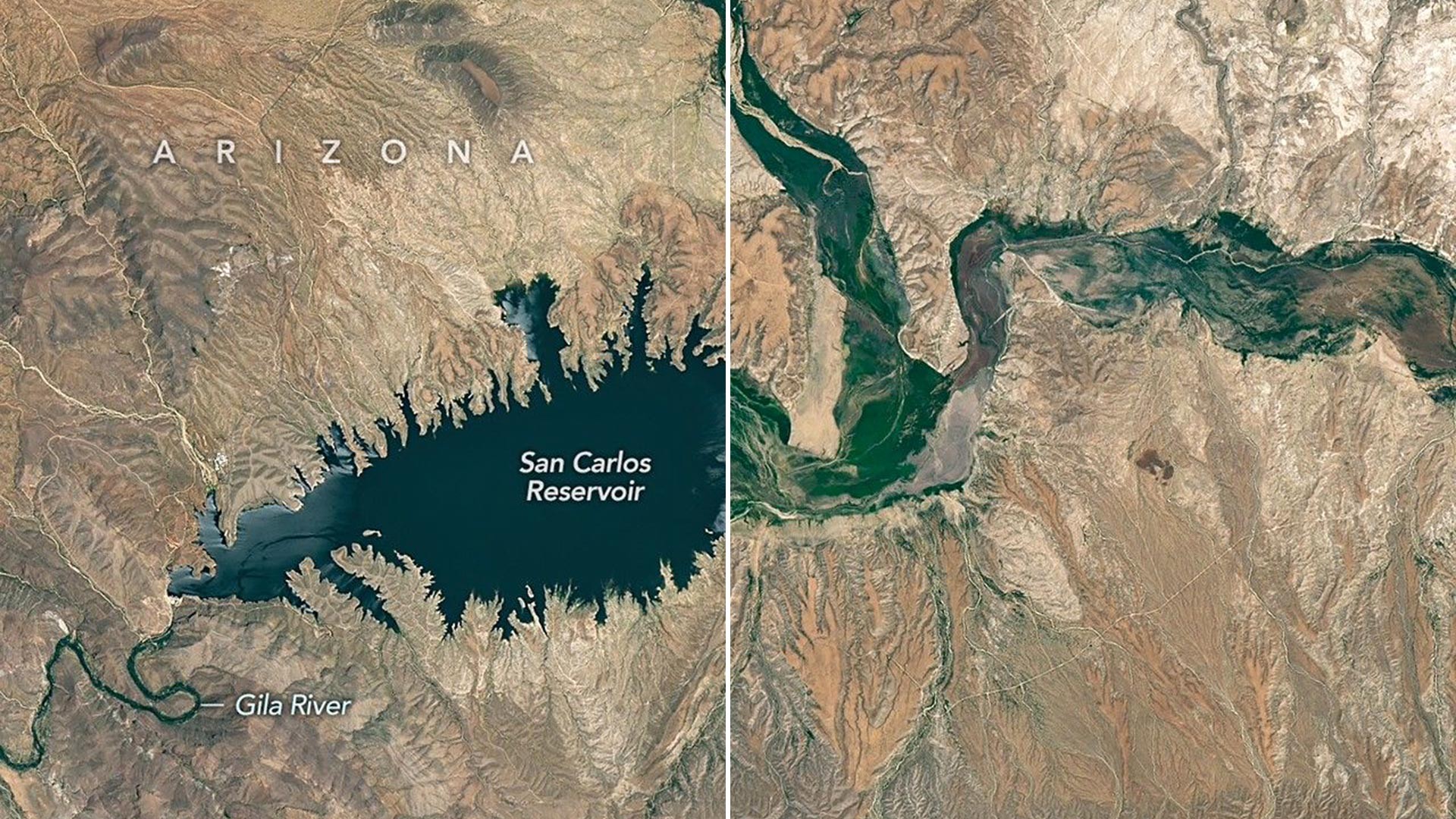
By June, the reservoir held less than 400 acre-foot. Satellite imagery doesn’t lie. Look at Landsat data from May 2026 and you see a ribbon of mud. Less than 1% full. Compare that to June 2023. The place was 60% full. Now tamarisk, willow cottonwood, and sedge are growing on the exposed lakebed because the water vanished.
“The vegetation lines the channel where water used to be.”
Then the fish died.
Not just some. All of them. Hypoxia struck as oxygen dropped in the shrinking, warm sludge. Largemouth bass. Black crappie. Catfish. Rainbow trout. Gone. The San Carlos Recreation and Wildlife Department closed the reservoir indefinitely on June 5. They warned about decomposing carcasses too. A health hazard for anyone dumb enough to try fishing.
Is it shocking? No.
This lake has gone completely dry twenty times since 1930. Will Rogers told President Calvin Coolidge during the dedication, “If that was my lake I’d mow it.” There was grass on the bottom back then. Fish kills aren’t new. Remember 1976? Five million fish died. Took five years for the ecosystem to bounce back. 2018? Same thing.
Maybe it gets better. Maybe not.
New Mexico remains in severe multi-year drought. The headwaters are thirsty. But monsoons are fickle and powerful. NOAA gave the region a 33 to 51% shot at above-average rain this summer. Add strengthening El Niño patterns in the Pacific and the odds tilt slightly toward relief. Heavy rain can refill this thing fast. If it hits.
The basin is waiting. Watching.
Will the sky crack open? Or does the tamarisk keep growing?