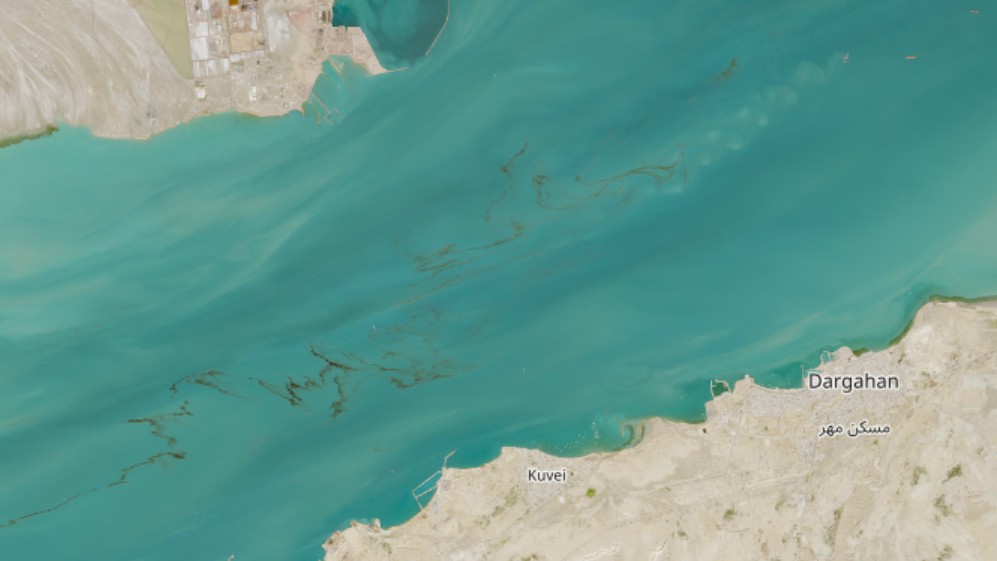
Recent satellite imagery has revealed a growing environmental catastrophe in the Persian Gulf. Following a series of air strikes by U.S.-Israeli forces targeting Iranian and regional energy infrastructure, significant oil spills have been detected across several critical maritime zones. These spills pose an immediate threat to delicate ecosystems and the water security of millions of people.
Ecological Threats to “Iran’s Maldives”
One of the most alarming developments is the oil leak detected near Lavan Island. Satellite images from April 10 show oil drifting toward Shidvar Island, a protected wildlife refuge often referred to as “Iran’s Maldives.”
This area is a vital sanctuary for biodiversity, featuring:
– Uninhabited coral reefs.
– Critical seabird colonies.
– Essential nesting grounds for sea turtles.
Experts, including Wim Zwijnenburg of the Dutch organization PAX, have characterized the spill near Lavan Island as a “major environmental emergency.” The proximity of the leak to Shidvar Island suggests that the region’s unique marine life could face devastating consequences.
Regional Infrastructure and Water Security at Risk
The impact of these spills extends far beyond wildlife conservation. The Persian Gulf is a lifeline for the region, and the contamination of its waters threatens two fundamental human needs:
- Drinking Water: Most of the region’s clean water is provided via desalination plants. Oil spills can clog and damage the delicate filtering systems required to turn seawater into potable water, potentially jeopardizing the supply for nearly 100 million people.
- Food and Livelihoods: In areas like Qeshm Island, where oil pools have been measured at over 5 miles (8 km) long, the local economy is at risk. Thousands of residents rely on fishing for both food and income; a collapse in fish populations would trigger a humanitarian crisis.
The Scale of the Damage
The biological impact of oil spills is often catastrophic and long-lasting. When oil coats marine life, it destroys the insulating properties of fur and the water repellency of feathers, leading to hypothermia and death. Furthermore, ingestion of toxic sludge leads to widespread poisoning.
The current situation echoes the environmental disaster of the 1991 Gulf War, where the intentional dumping of millions of barrels of crude oil killed an estimated 114,000 animals, including dolphins, whales, and turtles. The Persian Gulf is currently home to several endangered species at risk, including:
– Dugongs
– Green sea turtles
– Hawksbill sea turtles
– Arabian Sea humpback whales
A Growing Risk Amidst Ongoing Conflict
The scale of the potential disaster is compounded by the current geopolitical volatility. There are currently dozens of oil tankers—carrying an estimated 20 billion liters (5 trillion gallons) of crude oil —stalled in the Persian Gulf, waiting to pass through the Strait of Hormuz.
As long as military operations continue to target energy facilities and tankers, the risk of further spills remains high. Furthermore, environmental advocates, including representatives from Greenpeace Germany, warn that the ongoing conflict makes a timely and effective cleanup nearly impossible, leaving the marine ecosystem vulnerable to prolonged damage.
The intersection of military conflict and energy infrastructure has turned the Persian Gulf into a high-stakes environmental battlefield, where the cost of war is measured in both human security and ecological collapse.
In summary, recent air strikes have caused widespread oil spills that threaten the biodiversity of protected islands, the drinking water of 100 million people, and the stability of regional food supplies. With massive amounts of oil still at sea, the region faces a looming environmental catastrophe that may be impossible to mitigate while active conflict continues.