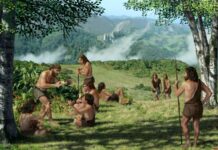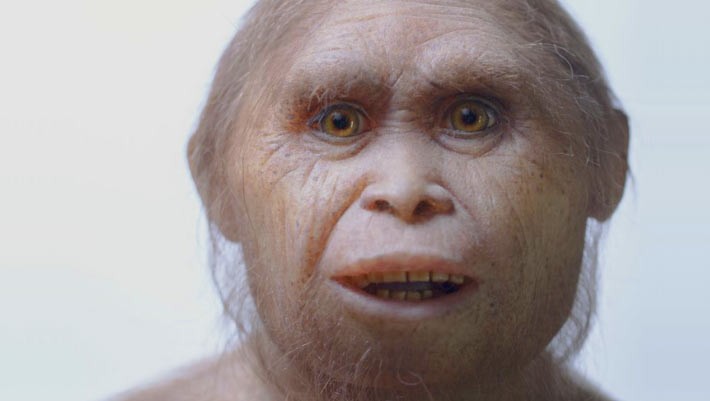
Homo floresiensis changed how we think about evolution. At least for a moment.
When the “Hobbits” were unveiled on the Indonesian island of Flores back in 2003 they looked like a genuine evolutionary anomaly. Tiny. Short-brained. Barely three feet and a half tall with a brain only a third the size of yours or mine.
But here’s the thing that made everyone pause.
We thought they were hunters. Big-game hunters.
They were supposedly taking down Stegodon those elephant-like cousins with thick armor and tusks. They were allegedly wielding fire cooking their meals shaping their world. For a creature that small? That seemed… improbable. Even magical.
“Homo floresiensis was originally described in 2004 as having relatively advanced behaviors…”
The early narrative relied heavily on association. Fossilized Stegodon bones. Stone tools. Ash layers. All mixed together in Liang Bua cave. It looked like a hunting campsite. It smelled like one to early researchers.
Dr. E. Grace Veatch from the Smithsonian Institution decided to check the math. And the dirt. And the teeth.
The Komodo Problem
Veatch and her team didn’t just look at bones. They watched predators.
To separate hominin tool marks from predator chewing they sent a Komodo dragon to Zoo Atlanta. Not to fight a human. To eat a goat.
Simple setup. Feed the lizard. Record the bite marks. Then go back to the cave.
What they found shattered the old story.
The damage patterns on the Stegodon fossils weren’t from humans killing elephants. They were from lizards eating elephants.
Komodo dragons were there first. They stripped the meat-rich bones. The juicy stuff.
By the time Homo floresiensis arrived they were left with scraps. Ribs. Phalanges. Skull fragments. Parts that don’t taste like much.
There were cut marks. Yes. But they were on the leftovers.
And where is the proof of hunting?
The bones show no projectile points. No impact fractures. No sign of active pursuit. The taphonomic record — that study of how things decay and fossilize — tells a bleaker truth. These weren’t hunters.
They were scavengers.
“The evidence suggests that the Stegododon assemblage reflects primary access by Komodo dragons… and secondary access by Homo floresimensis.”
Primary access. The lions of the story.
Secondary. The guys showing up late to the buffet.
Ash to Dust
Fire? Forget it.
Researchers expected fire residues. Instead they found almost nothing.
Out of 3100+ Stegodon fragments exactly one rib fragment showed signs of heat exposure. One.
And even that likely wasn’t the Hobbit’s doing.
Modern humans showed up on Flores much later. They set fires. Those fires heated ancient bones long after they were dead. It was a contamination timeline. Not a campfire log.
Look at the rodents.
About 20 percent of rat and mouse bones found with Homo sapians bore burn marks. Modern people cook rats too? Maybe.
But the layer belonging to Homo floresimensis? Zero percent. Out of 4200 rodent bones none had seen fire.
This isn’t a gap in data. It’s an absence of practice.
Smaller Brains Different Lives
We tend to map modern behaviors onto ancient ancestors. If they made tools they must have used them well. If they had fire they must have been chefs.
Wrong.
Without cooking the body adapts differently. Hominins who eat raw meat generally keep larger guts larger chewing apparatuses. Homo floresiensis had neither. It kept a primitive gut suited for raw food.
It also lacked the physique for the hunt.
No running endurance. No throwing mechanics. The limbs just didn’t do what we needed for bringing down giants.
So maybe we need to stop expecting them to be us.
“The evidence suggests H. floresiensis did not possess a behavioral repertoire as diverse… as modern humans…”
Perhaps they lived a simpler life. A quieter one. Eating scraps. Avoiding the lizard king of Flores.
That makes them less impressive in a movie-trailer sense. Less heroic.
But perhaps more interesting?
The study appeared in Science Advances this summer. July 2026 if you need to cite it. The title says “behavioral capabilities” which feels generous given the conclusion.
We like stories about overcoming odds. About small creatures wielding big power.
Reality is usually messy. Usually raw. Usually eaten by reptiles before it matters.