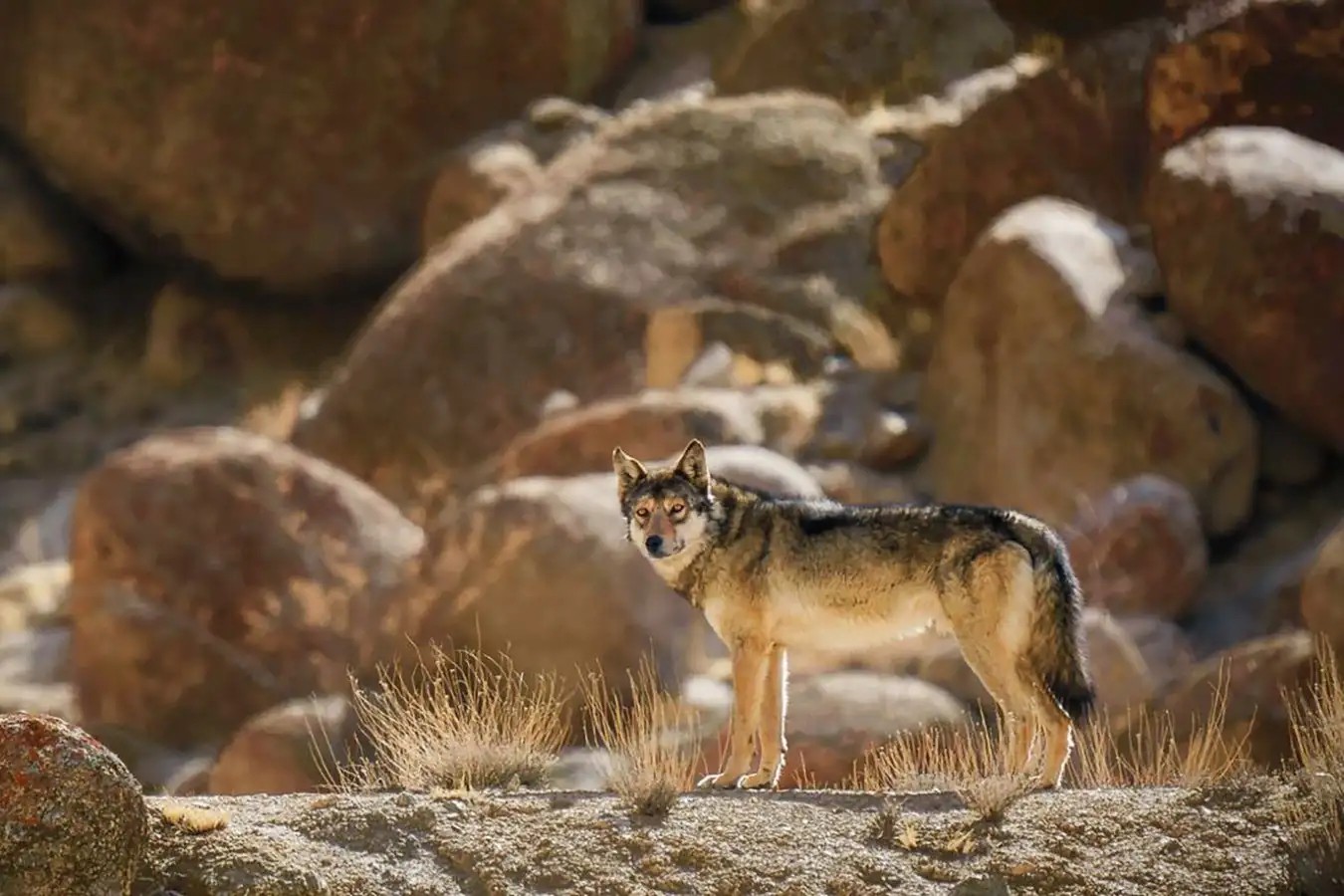
Grey coat. Effortless trot through deep snow. It stops, stalks a marmot, and finishes the job in one bite. It’s a wolf. Or is it?
I am standing at 5000 meters in Indian-administered Ladakh. The air is thin, the landscape harsh, and life here is a grind for the mammals that survive it—snow leopards, brown bears, Tibetan foxes. And wolves. The Himalayan wolf.
These are the original lineage of Canis lupus. Ancient. Hardened against low oxygen and biting cold. But their future looks shaky. These mountains are heating up twice as fast as the global average. Urban sprawl is encroaching. Trash piles up. Farmers are wary. It was enough. But now there is a new variable. One that terrifies local experts.
Feral dogs.
“It has the fearlessness and habitation of a dog and the killing instinct wolf. That’s a deadly combination.”
Ladakh holds roughly 25,00 dogs. Maybe more. The wolf population? Just a few hundred. The math isn’t even close. For the last decade, these dogs—pets, strays, organized into packs—have moved into the mountains. They hunt the same prey. They compete. And recently, they started breeding.
The result is a hybrid. Locals call it a khipshang. A blend of khi (dog) and shangku (wolf).
Tsewang Namgail heads the Snow Leopard Conservancy in Ladakh. He says people are only just now noticing the change, in the last five to ten years. It isn’t really a wolf. Not really a dog either. Just a cross. Bigger than the village strays but smaller than a true wolf. With a tawny coat. And it leads the packs.
It outcompetes other carnivores. Worse? It doesn’t fear humans.
Mohammad Imran, a naturalist and filmmaker from the region, confirms the behavior. These hybrids are bold. They enter villages. They kill livestock without hesitation. Namgail notes the shift is dangerous. Not just for herders, but for the wolves themselves. He worries the genetic purity of the remaining wild wolves is being diluted. He estimates there are only about 80 khipshang in the vast 60,00 square kilometer territory right now. But that number feels volatile.
Dog bites are already a daily crisis in Leh, the capital. Four or five cases every single day in the local hospital. At least four deaths this year. Experts fear it gets worse if the hybrids multiply.
Why are there so many dogs?
It’s a mess of biology, history, and law. Dog sterilization is illegal. Buddhist beliefs often discourage harming animals or disrupting nature. Then there are the army bases. With a long history of border conflict, dogs are a defense layer. Barking alerts soldiers. Soldiers feed the dogs. This permissive environment spills over into the wild. It brings rabies and canine distemper too, diseases that are knocking back fox and wolf populations even faster.
“Since these are new species they don’t have a place in the chain and it’s so fragile to disrupt. That makes them dangerous for all of us.”
With so few wolves and so many dogs, the canid hierarchy in the highest mountains on earth is flipping. It mirrors trends in Italy and North America, where eastern wolves are vanishing into genetic sludge caused by hybridization. Carter Niemeyer, the man who helped reintroduce wolves to Yellowstone and Idaho in the nineties, hates this. He insists wolf-dogs shouldn’t procreate. He wants the wolf line pure.
Is purity even possible in the modern world?
Later that day we see a pack of dogs on the side of a highway. The wind is brutal. Some are asleep on the blacktop. Others beg for food. One stands apart. Ears back. Posture different.
Morup Namgail travels with me. He is a wildlife photographer who has seen khipshang across Ladakh. Even a rare fox-dog hybrid once. He wonders about this solitary animal.
I remember another encounter from two years ago. A pack of dogs chasing a mother snow leopard off an Ibex carcass. One lead dog had this specific look. Bold. Unafraid. It didn’t bark. Just watched. Was it a dog? Or something else?
As we drive away Morup says the khipshang are symbols of the changing landscape. He says wolves learn and they teach. If they start acting like dogs. If they learn from dogs. The conflict won’t end. It will deepen. No one knows how it plays out. The ecosystem is fragile. The new players are fearless. We just watch them. And wait.