New geological research suggests that a volcano’s silence does not necessarily mean it is dead. A study led by volcanologists at ETH Zurich reveals that some volcanoes, previously classified as extinct, may actually be accumulating massive underground reservoirs of magma during long periods of inactivity.
This finding challenges long-held assumptions in volcanology and suggests that many “sleeping” volcanoes could be much more dangerous than current hazard models predict.
The Methana Paradox: A 100,000-Year Silence
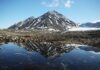
To understand this phenomenon, researchers focused on the Methana volcano near Athens, Greece. By analyzing the geological history of the site spanning 700,000 years, the team uncovered a striking contradiction: a massive “bloom” of zircon crystals occurred during a period when the volcano appeared completely dormant.
This period of inactivity lasted more than 100,000 years, yet the chemical evidence suggests that magma was being produced at high volumes beneath the surface.
The “Flight Recorders” of Geology
The researchers achieved this breakthrough by studying zircon crystals. These tiny minerals act as natural “flight recorders”; they form in magmatic environments and preserve a precise record of when and where they were created.
By using radioactive decay rates (such as uranium) to date over 1,250 crystals, the team reconstructed the volcano’s “inner life” with unprecedented precision. They discovered that the peak of magma production at Methana actually coincided with its longest period of surface silence.
Why Do Volcanoes “Sleep” While Magma Builds?
The study explains this paradox through the mechanics of subduction zones. Methana is part of the South Aegean Volcanic Arc, where one tectonic plate slides beneath another.
- The Fuel: As the plate descends, it carries seawater and seabed sediments into the Earth’s interior.
- The Reaction: This water hydrates the mantle, “supercharging” the production of magma.
- The Stall: Paradoxically, this water also causes crystallization within the magma, making it thicker and more viscous.
This thickened, “wet” magma moves much more slowly than typical molten rock. While it continues to accumulate in massive quantities deep underground, it lacks the mobility to break through the surface, leading to centuries or even millennia of deceptive calm.
Implications for Global Volcanic Hazards
This discovery is significant because current volcanic hazard forecasts often rely on a simplified rule of thumb: if a volcano hasn’t erupted in roughly 10,000 years, it may be considered extinct.
The Methana data proves that this timeline is unreliable. A volcano can “breathe” and build pressure for much longer than previously thought without showing any signs of life on the surface. This creates a high risk for human settlements, as a sudden eruption from a perceived “extinct” volcano could catch populations entirely unprepared.
“We actually believe that many subduction zone volcanoes might be periodically fed by particularly wet primitive magma, something that the scientific community has not yet fully recognized.”
— Răzvan-Gabriel Popa, ETH Zurich
A Call for Vigilance
The researchers suggest that the scientific community must move away from assuming dormancy equals safety. To prevent future disasters, they recommend that global hazard authorities increase monitoring of dormant volcanoes by tracking:
– Gas emissions
– Ground deformation
– Volcano-tectonic earthquakes
– Gravity anomalies
Conclusion: By proving that magma can accumulate silently for millennia, this study highlights the urgent need to reassess the status of “extinct” volcanoes and implement more rigorous monitoring of long-dormant volcanic sites.