The growing cloud of space debris orbiting Earth poses a significant threat to future space exploration. With nearly 130 million pieces of junk—ranging from defunct satellites and spent rocket stages to microscopic collision fragments—cluttering low Earth orbit (LEO), the risk of catastrophic collisions is rising. However, a new study reveals a natural mechanism that helps mitigate this problem: increased solar activity accelerates the descent of space debris into Earth’s atmosphere.
The Solar-Debris Connection
While active satellites and space stations use engine burns to maintain their altitude, space junk drifts uncontrollably. Over time, atmospheric drag naturally pulls these objects toward Earth, but the process is typically slow. Researchers have long understood that solar activity influences this drag, but a new analysis provides precise data on how and when this effect becomes significant.
A team led by Ayisha Ashruf, a scientist at India’s Vikram Sarabhai Space Centre, analyzed the trajectories of 17 pieces of space debris in low Earth orbit. The study spanned 36 years, covering three full 11-year cycles of solar activity. By utilizing historical data from the German Research Centre for Geosciences, the team tracked sunspot numbers and daily solar emissions to correlate them with the orbital decay of objects launched as far back as the 1960s.
The findings were clear: once solar activity exceeds a specific threshold, space debris loses altitude noticeably faster.
Why This Matters for Space Operations
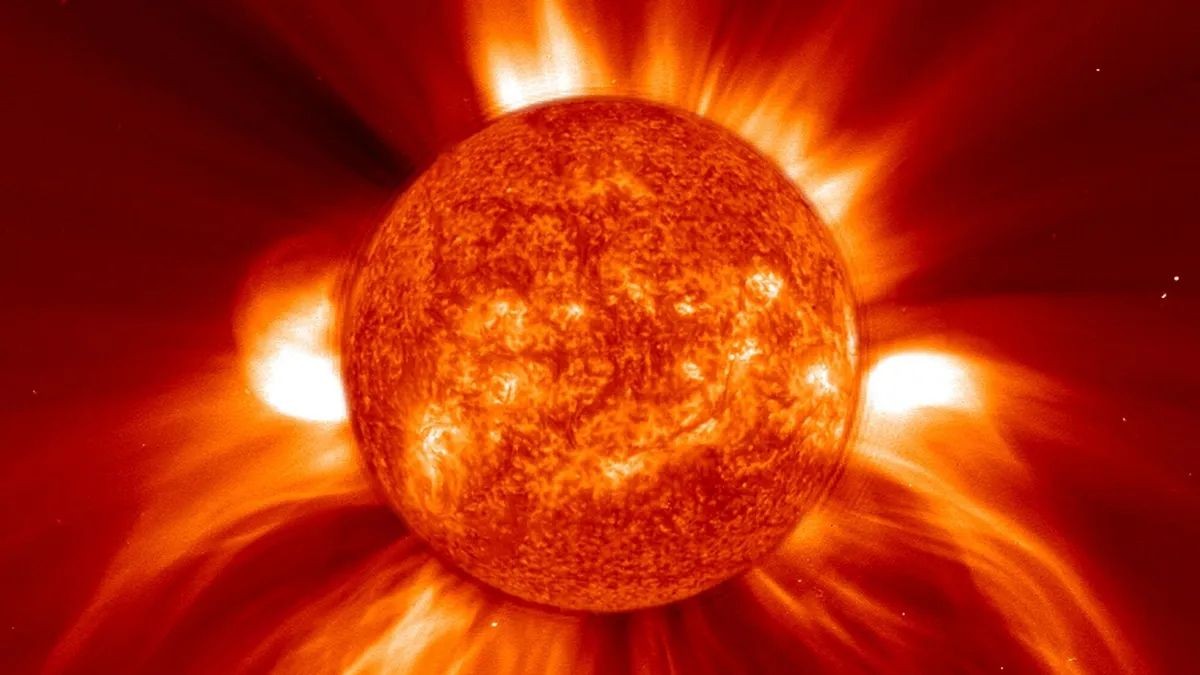
The mechanism behind this phenomenon is straightforward. When the sun is more active, it emits higher levels of radiation and energy. This energy heats Earth’s upper atmosphere (the thermosphere), causing it to expand and become denser at altitudes where satellites orbit.
- Increased Density: A denser atmosphere creates greater aerodynamic drag on orbiting objects.
- Faster Descent: This increased drag slows down the debris, causing it to spiral toward Earth more rapidly.
- Fuel Implications: For active satellites, this means they must perform more frequent and fuel-intensive orbit corrections to avoid falling or drifting out of position.
“This observation is expected to be key for planning sustainable space operations in the future,” said Ashruf.
Strategic Implications for Satellite Missions
The study highlights a critical factor for mission planners: the timing of a launch relative to the solar cycle.
Satellites launched near a “solar maximum” (the peak of the sun’s activity cycle) will experience higher atmospheric drag earlier in their operational life. This directly impacts two key metrics:
1. Orbital Lifespan: Satellites may need to burn more fuel to maintain position, potentially shortening their useful life if fuel reserves are depleted.
2. Fuel Budgeting: Mission designers must account for higher drag coefficients during active solar periods, requiring larger fuel tanks or more efficient propulsion systems.
Conversely, the natural “cleaning” effect of solar maximums offers a silver lining. The accelerated decay of debris means that inactive objects are removed from orbit more quickly, reducing the long-term clutter in low Earth orbit.
Conclusion
While space debris remains a serious hazard, understanding the dynamic relationship between solar activity and atmospheric drag allows for more precise orbital management. By accounting for solar cycles in mission planning, engineers can optimize fuel usage and satellite longevity, while also leveraging natural forces to help clear the skies of dangerous junk.