Forget the idea of perfection.
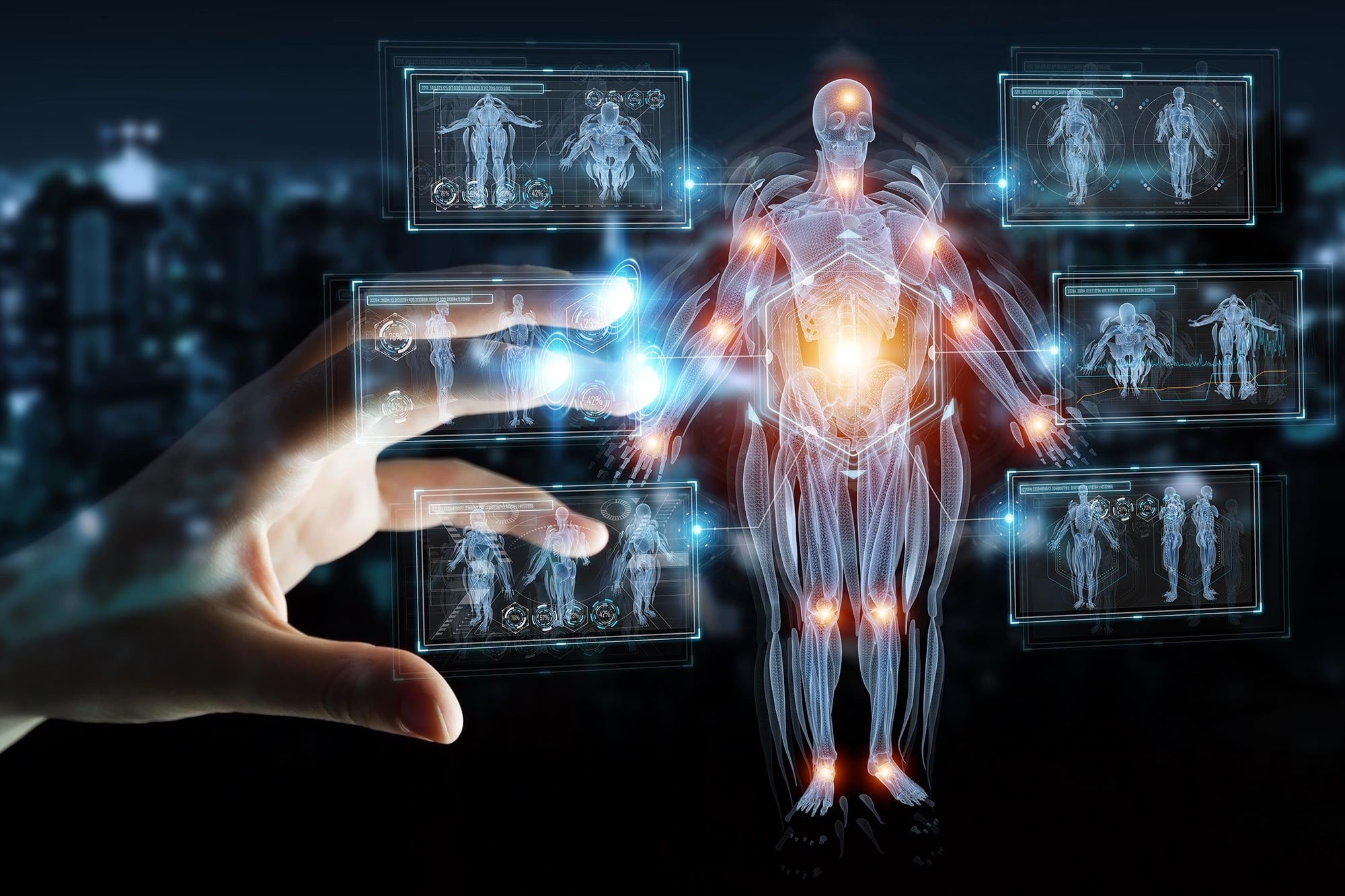
The human body isn’t an elegant machine crafted by a genius engineer. It is a mess of compromises, duct tape, and leftover parts from ancestors we don’t even resemble. We evolved not from scratch but by repurposing what was already there. Evolution adapts. It reshuffles. It doesn’t design.
Most medical headaches aren’t bugs in the code. They are features inherited from millions of years ago.
The Back Problem
Take the spine.
Our ancestors walked on four legs, living in trees, needing a flexible beam to bounce between branches and protect the spinal cord. Simple.
Then humans stood up.
We tried to fit a vertical upright posture into a structure built for horizontal balance. The spine had to hold our weight, maintain our center of gravity, and stay flexible enough to move. It’s trying to do two opposite jobs at once. The resulting S-curves help distribute the load but create immense strain.
This is why lower back pain is so common. Not because your back is weak, but because you are forcing a tree-climbing skeleton to support a two-legged primate.
A Nerve’s Detour
Logic suggests efficiency. Nature suggests history.
Consider the recurrent laryngeal nerve. It connects the brain to the voice box (larynx), helping us speak and swallow. The distance is short. A direct line would be logical.
Instead, the nerve travels down into the chest, loops around an artery, and travels all the way back up to the throat.
Why?
Because our distant ancestors were fish. The nerve ran straight from the brain to the gills. As necks lengthened during evolution, the nerve just stretched along. It wasn’t rerouted. It just got longer. This detour makes the nerve vulnerable to injury during neck or heart surgeries.
A direct path makes no evolutionary sense, yet that’s exactly the inefficiency we carry with us today.
Eyes That See Backwards
Even our eyes are wired poorly.
In humans and other vertebrates, retina sits backward. Light has to punch through layers of blood vessels and nerve fibers before hitting the actual photoreceptor cells.
It’s clumsy.
The optic nerve bundles through the middle of this retinal tissue, creating a physical hole where no vision is possible—a blind spot. Our brain edits this gap out seamlessly, so we don’t notice. But if you were designing an eye from scratch, you wouldn’t put the wiring in front of the sensor. You would put the sensor first.
We traded efficiency for survival. We survive, so it stuck.
Teeth and the End of the Line
We get two sets of teeth.
That’s it. Baby teeth fall out. Adult teeth come in. When those fail, that’s the end of the story. Sharks, for example, grow teeth their entire lives. Humans? No.
In mammals, tooth development ties closely to jaw growth and diet. Our ancestors needed durable teeth for tough diets. We have soft diets now. We don’t need them as much, but our body still treats tooth loss as a final state.
Wisdom teeth illustrate the lag. Our jaws shrank as our food became softer and cooking took over chewing duties. Our teeth didn’t get the memo. They still try to fit into a mouth that has nowhere to put them. Crowding, impaction, surgery.
The teeth fit the old skull. The new skull can’t fit the old teeth.
The Birthing Trap
Childbirth is dangerous for humans. Unnecessarily so compared to most animals.
We walk upright, which requires a narrow pelvis for efficient stride. But we also have big brains, which means big baby heads.
Evolution tried to balance a narrow pelvis (for walking) against a wide birth canal (for the brain). It compromised. The result is a narrow passage for a large head. Birth is difficult, painful, and risky. It requires external help—social bonding and cooperation became necessary for survival.
Is it a bug? Or a feature of our social nature? Probably both.
Leftover Parts
Evolution doesn’t delete things unless they cause major problems. It just ignores them.
The appendix sits there. Once thought useless, it has some minor immune roles, but it also traps bacteria and bursts. Sinuses are similar—maybe they lighten the skull, maybe they affect voice—but their drainage is prone to infection and blockage.
Tiny muscles around your ears? Vestigial. They help animals swivel ears to hear sounds better. We have the muscles. Most of us can’t use them.
What is left?
Our anatomy is an archive. Every back pain, every impacted tooth, every sinus infection is a footprint left by the past. We are not broken. We are just old.