


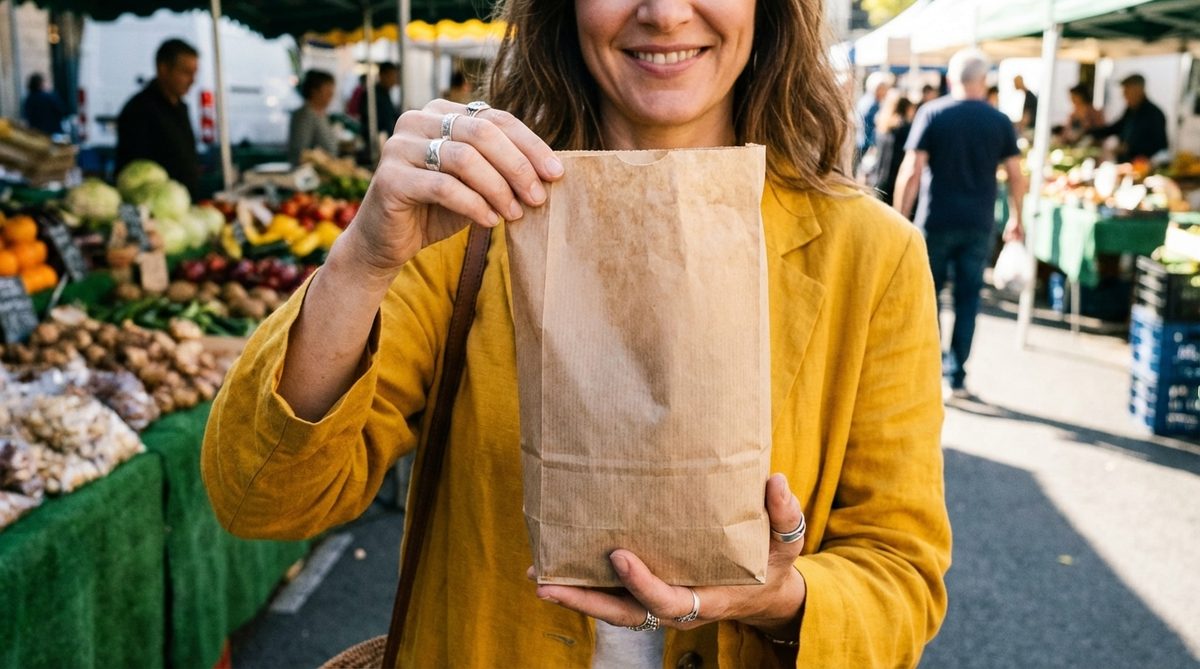
Every Saturday at noon, the same frustrating scene unfolds on the kitchen counter. There were piles of crumpled brown paper bags that were supposed to be environmentally friendly but ended up in the trash. It’s fun to buy local and seasonal products. Especially in spring, delicious agricultural products are lined up at the sales points. But a pile of disposable packaging in one morning is enough to make you dizzy.
It’s a small change of habits. Something that anyone can adopt. However, this stops the flow of waste permanently and reduces the strain on modern kitchen recycling bins.
Kraft paper myths and the overflow box syndrome
Market profits often look like models of environmental responsibility. Priority is given to short supply chains. We avoid the ubiquitous plastic in supermarkets. We happily filled our bags with fresh produce wrapped in the famous brown paper. Looking at kraft paper immediately brings to mind beautiful pictures of nature and craftsmanship.
The reality is not so good for the environment. This weekly ritual revealed a major flaw in the bag’s very short life. It can tear or dust in a matter of hours. When you touch raw vegetables, they absorb water.
Don’t forget the hidden environmental costs of this valuable material. Paper production requires large amounts of water and energy. Carrying it to the store is a burden. Treating packaging as completely green just because it’s recyclable is a sweet utopia. This is especially true if you only use it to transport mushrooms and sprouts from the stall to the crunchier drawer of the fridge.
An unexpected turning point
It always happens on that fateful Saturday morning when I finally take the time to count my wasted weekend. More than a dozen bags were stacked randomly on the table. They can be colored with the juice of spring strawberries or pierced with the hard stems of fragrant herbs. This is a real confession. Cellulose piles can directly clog local recycling systems.
Faced with such everyday disasters, it becomes clear that there is an urgent need to find feasible and practical alternatives. Anyone looking to reduce their carbon footprint needs a solution. The search for the perfect accessory begins. Waste must end forever.
The goal is simple. Look for options that are lightweight and completely hygienic. It must be able to hold all kinds of food and not tear at the first hurdle. Forget hard boxes. It’s too heavy to carry around for hours. Solutions must be flexible and flexible.
The amazing efficiency of reusable textile bags
This is where the real revelation happens. Reusable Bulk Bag A winning entrance supported by a sturdy traditional wicker basket. This is not just a bohemian trend. This pair will fundamentally change the shopping experience in cities and in the countryside.
This delicate fabric, often woven from organic cotton or natural linen, allows fruits and vegetables to breathe. Prevents the dreaded condensation. In a closed environment, condensation accelerates spoilage.
It is very reassuring to see how these simple fabrics can crush existing disposable options in seconds. they are very powerful. If the fruit gets too dirty, it’s easy to throw it in the washing machine. If you fold it carefully, it won’t take up any space. Light enough to handle the competition. The lazy claim of carrying extra weight is outdated.
A sure way to create long-lasting habits
The right equipment is not enough if you forget to bring it with you on market day. The ultimate secret of a successful and lasting transition lies in strict and disciplined preparation rituals. Strategically placing these containers is very important for memory.
The best way to make sure you don’t miss out is to slip it right into the bottom of a regular Shopping Bag. If it comes out as a clothesline, dispose of it immediately. Or put it in the trunk of your car right away.
Increase the efficiency of busy morning shoppers by assembling your textile products according to the different food lines you are looking for. Here’s a winning combination to tackle your Shopping List with peace of mind:
- Small and light shape, suitable for dried fruits, garlic and shallots.
- Medium-sized cotton bag for storing tomatoes and delicate seasonal fruits.
●Large and durable net that can withstand the weight of new potatoes and winter onions.
This change applies to more than bags. This is about spotting waste before it becomes a habit. Once you see that mountain, you can never see it again. The wicker basket was left in the trunk. The cotton bags remain in the bag. This is a minor sticking point. It will eventually become flat.
But can rattan hold up after growing heavy roots for a year? This is pending wear tests. For now, the counter is empty.
When you pull out your bag, your first reaction may be curiosity and mild confusion. Buyers may feel they are being watched. But the excitement quickly dissipated. It is a real relief for local businesses to have reusable carrier bags.
The calculation is easy. Dozens of plastic bags are distributed for free every day, and the amount is huge. This is the actual line item of your annual budget. Store owners save money when customers make their own containers. The cost savings are small, but significant after a year.
Then there is the question of measurement. Many people worry about the tare process of digital scales. They fear complexity. they are afraid of making mistakes. This is a false fear. Most canvas bags weigh only a few grams. Of the total cost of 1 kg of zucchini, only 1 gram is wasted. This is very small.
The increase in speed is interesting. No more messing around with sticky, torn plastic bags with wet hands. Just open the bag and give it to the store clerk. It slides into place instantly. Shopping runs more smoothly. This is how we respect our employees. This is respect for the country.
How reusable bags are reinventing the whole concept of shopping
After a few weeks of training, the journey home looked different. The visual clutter of weekly paper bags is gone. This is not just an aesthetic problem. This is logistical peace of mind.
Unpacking food has turned from a simple job into a ritual. The yellow bin fills up much more slowly. The effect is mathematical. By changing your habits, you can significantly reduce the amount of waste you produce.
This win created momentum. After defeating plastic bags, we can also deal with other environmental problems. You start looking for the package hidden in the corner of your pantry. You start paying attention to the bread of the local bakeries. You’re thinking about cheese. Every small decision is important.
The goal is to turn your kitchen into a sanctuary with no excess. Replacing automatic habits with intentional ones changes your footprint. Taking care of yourself restores human dignity.
Is keeping a few washable towels close to your wallet the key to a green spring? The market is already witnessing this change. The seller is even more satisfied. Less waste. Your routine will run more smoothly. It’s not a question of whether it works. That’s why it hasn’t started yet.


