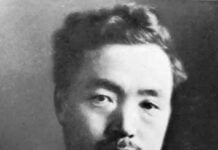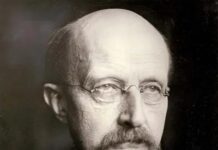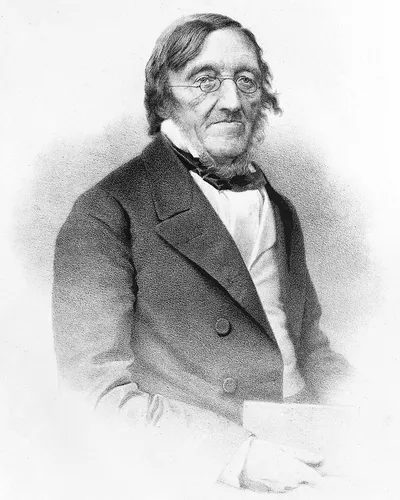
Karl Ernst von Baer changed how we understand human origins. Not by writing philosophy, but by looking at eggs. In 1827, he proved that mammals, including humans, develop from eggs. This wasn’t just a biological footnote. It shattered the idea that humans were fundamentally separate from the rest of the animal kingdom.
Born in 1792 in Estonia, then part of the Russian Empire, Baer came from a large family. His parents were first cousins. He spent his early childhood with relatives before returning to his own home at age seven. By 1810, he was at the University of Dorpat, studying medicine. He got his degree in 1814. But he wasn’t satisfied. Standard medical training felt too narrow.
So he went to Germany and Austria. The pivot point came during the 1815–16 academic year. At the University of Würzburg, Ignaz Döllinger introduced him to comparative anatomy. This opened a door to embryology. He saw a new world in the study of how life begins.
The Missing Egg and the Germ Layer Theory
Baer started teaching in Königsberg in 1817. He married Auguste von Medem that same year. They had six children. He wanted to study chick development, inspired by his mentor. But he couldn’t afford the eggs or the attendants to watch the incubators.
Enter Christian Pander. A wealthier friend, Pander took up the task. In 1817, he described the early development of the chick using what we now call the primary germ layers: ectoderm, mesoderm, and endoderm.
Baer took this concept and ran with it. From 1819 to 1834, he extended the germ-layer theory to all vertebrates. He laid the foundation for comparative embryology. This field allows scientists to compare the development of different species to understand evolutionary relationships.
His biggest breakthrough came in 1827. He published De Ovi Mammalium et Hominis Genesi. In it, he described the discovery of the mammalian ovum. Before this, scientists thought the egg was only for birds and reptiles. Baer showed that mammals use eggs too. Humans included.
He also fought against a popular myth. Some believed embryos of one species passed through stages that looked like adult animals of other species. Baer disagreed. He argued that embryos of one species resemble other embryos. The younger the embryo, the more similar they look. This was his epigenetic idea. Development moves from simple to complex. From homogeneous to heterogeneous.
Why Baer’s Work on Vertebrate Development Matters Today
His most important book, Über Entwickelungsgeschichte der Thiere, came out in two volumes between 1828 and 1837. It surveyed all known knowledge on vertebrate development. From this survey, he drew far-reaching conclusions.
He identified the neural folds as precursors to the nervous system. He discovered the notochord. He described the five primary brain vesicles. He studied extra-embryonic membranes. These discoveries made embryology a distinct field of research.
Baer marked the lines of descriptive and comparative study needed before causal analysis could emerge. He didn’t just find things. He defined how to look at them.
From Embryology to Geography and Anthropology
In 1834, Baer moved to St. Petersburg, Russia. He became a full member of the Academy of Sciences. He left behind embryology.
He became an explorer of the Russian north. He was the first naturalist to collect specimens from Novaya Zemlya. Then an uninhabited island. He traveled extensively throughout Russia. He developed a strong interest in fisheries. He also made geographic discoveries about riverbank formation.
His travels fueled his interest in ethnography. He built an extensive skull collection for the Academy. This work led him to call a meeting of craniologists in Germany in 1861. That meeting established the German Anthropological Society. It also founded the journal Archiv für Anthropologie.
He founded the Russian Geographical Society. He founded the Russian Entomological Society. He was its first president.
Evolution Before Darwin
Baer considered kinship between animals early on. In 1859, the year Charles Darwin published On the Origin of Species, Baer published a work on human skulls. He suggested distinct stocks might originate from one form. Darwin and Baer developed their ideas completely independently.
But Baer wasn’t a strong adherent to transformation. Or evolution, as we call it now. He believed some animals, like goats and antelopes, were related. He vehemently rejected the idea that all living creatures evolved from one common ancestor.
His views were philosophical. His embryological writings were philosophical too. He saw nature as a whole. Not through modern evolutionary theory, but through a cosmic lens. He viewed the development of organisms and the cosmos in the same light.
It was an all-encompassing view. It brought together diverging threads in his thought. The egg, the river, the skull. All part of the same pattern.
The pattern remains. We still use his germ layers. We still recognize the notochord. We still ask how the simple becomes complex. Baer didn’t just describe life. He gave us the language to discuss its beginning. The questions he raised are still being answered. The answers are changing.