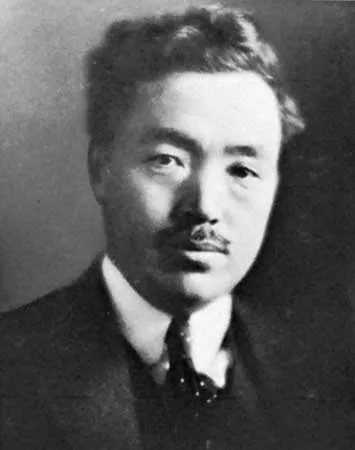
Hideyo Noguchi was a bacteriologist who changed how we understand infectious diseases. His story is not just about discovery. It is about the cost of science. Born in Inawashiro, Japan, on November 24, 1876, he became one of the most prominent Japanese scientists in the United States. He died in Accra, Ghana, on May 21, 1928. He was only 51.
He is best known for proving that syphilis affects the brain. In 1913, he identified Treponema pallidum in the brains of people suffering from general paresis. This was a massive leap. Before this, the link between the bacteria and the neurological decline was theoretical. He showed it was real.
His work extended beyond syphilis. He proved that Oroya fever and verruga peruana were caused by Bartonella bacilliformis. These two conditions were once seen as separate illnesses. Noguchi showed they were different phases of what we now call Carrion’s disease, or bartonellosis. This helped doctors diagnose patients in South America more accurately.
Early Career and American Training
Noguchi graduated from a medical school in Tokyo in 1897. He did not stop there. In 1900, he moved to Philadelphia. He joined the University of Pennsylvania. There, he worked under Simon Flexner. The focus was snake venoms. This work trained him in rigorous laboratory methods.
In 1904, he moved to the Rockefeller Institute for Medical Research in New York City. This sponsorship would last for nearly twenty-five years. It provided the stability needed for deep research.
At Rockefeller, he devised new ways to grow microorganisms. Most bacteria of the time could not be cultivated in test tubes. He found methods that worked. This opened doors for studying difficult pathogens.
A Life Cut Short by Disease
His research was wide-ranging. He studied poliomyelitis. He looked at trachoma. He worked on a vaccine for yellow fever. He also developed a serum for the same disease.
Why does this matter today? Because he was trying to stop outbreaks. Yellow fever killed thousands. His serum offered hope. It reduced mortality rates in some trials. But he could not save himself.
In 1928, he traveled to Africa for research on yellow fever. He contracted the disease. He died in Accra, then part of the Gold Coast colony. He died doing the work he loved.
Legacy in Modern Medicine
Today, we remember his technical innovations. He proved that complex diseases have specific bacterial causes. He showed that seemingly unrelated symptoms can be part of one illness.
His work on syphilis laid groundwork for neurosyphilis treatment. His insights into bartonellosis helped doctors in Peru and Ecuador. He showed that microbiology is not just about isolation. It is about connection.
He died young. But his methods lived on. Other researchers used his cultivation techniques. They built on his findings. The Rockefeller Institute continued its mission. So did the field of bacteriology.
We often look at his life as a tragedy. It is. But it is also a testament to curiosity. He asked questions others