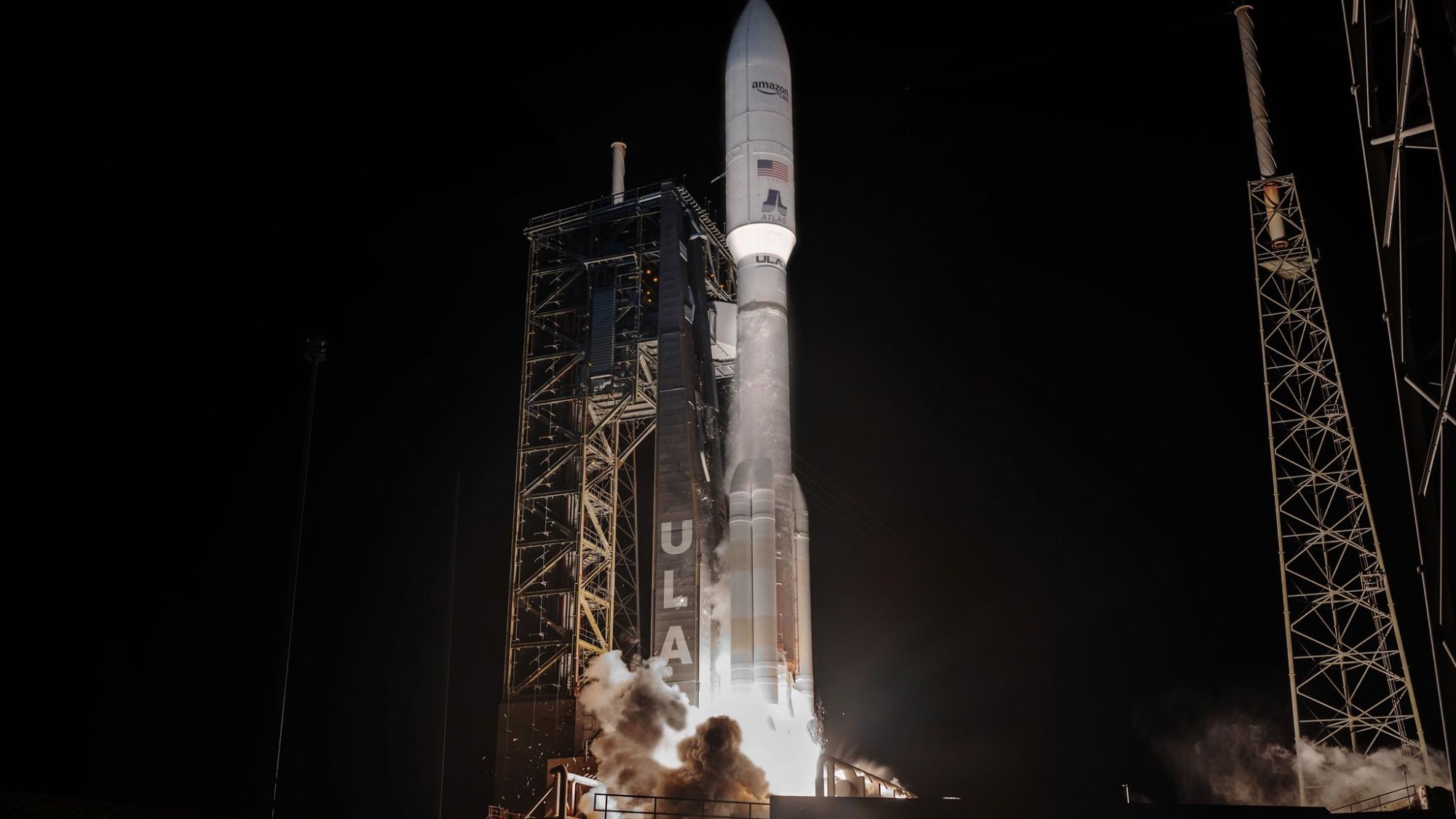
Amazon is moving one step closer to completing its global broadband infrastructure. Tonight, April 27, a United Launch Alliance (ULA) Atlas V rocket is scheduled to launch 29 satellites into low Earth orbit as part of the ongoing Amazon Leo project.
Launch Details and Live Coverage
The mission is set to lift off from the Cape Canaveral Space Force Station in Florida. The launch window is expected to open at 8:52 p.m. EDT (0052 GMT on April 28) and will remain open for 29 minutes.
For those interested in watching the event, live coverage will be available through ULA and Space.com, with broadcasts typically beginning 20 minutes prior to the scheduled liftoff.
The Scale of the Amazon Leo Project
Formerly known as Project Kuiper, Amazon Leo is a massive undertaking aimed at creating a high-speed, low-latency internet constellation. This project serves as a direct competitor to SpaceX’s Starlink, which currently dominates the satellite internet market.
To achieve its full operational capacity, Amazon plans to deploy a network of more than 3,200 satellites. However, the scale of this ambition is reflected in the sheer number of launches required:
– The project will require over 80 individual launches using various rocket providers.
– To date, only nine launches have been completed.
– This specific mission, Amazon Leo 6, marks the sixth time ULA has assisted in this deployment.
A Diverse Fleet of Launch Providers
Amazon is not relying on a single partner to build its constellation; instead, it is utilizing a multi-provider strategy to ensure a steady supply of orbital capacity. The current launch tally includes:
– ULA (Atlas V): 5 missions
– SpaceX (Falcon 9): 3 missions
– Arianespace (Ariane 6): 1 mission
The momentum for the project is expected to continue immediately, as Arianespace is scheduled to launch another Amazon Leo mission from French Guiana early on Tuesday, April 28.
Pushing the Limits of the Atlas V
This mission follows a trend of increasingly heavy payloads for the Atlas V rocket. During the previous mission (Amazon Leo 5) on April 4, the rocket set a new record by carrying 18 tons into orbit. Given that tonight’s mission also carries 29 satellites, it is expected to match that record-breaking weight.
The success of these heavy-lift missions is critical for Amazon, as the ability to deploy large batches of satellites at once significantly accelerates the timeline for building a functional global network.
Conclusion: Tonight’s launch represents a vital incremental step in Amazon’s race to compete in the satellite broadband market, testing the heavy-lift capabilities of the Atlas V to build out a massive, multi-thousand-satellite constellation.