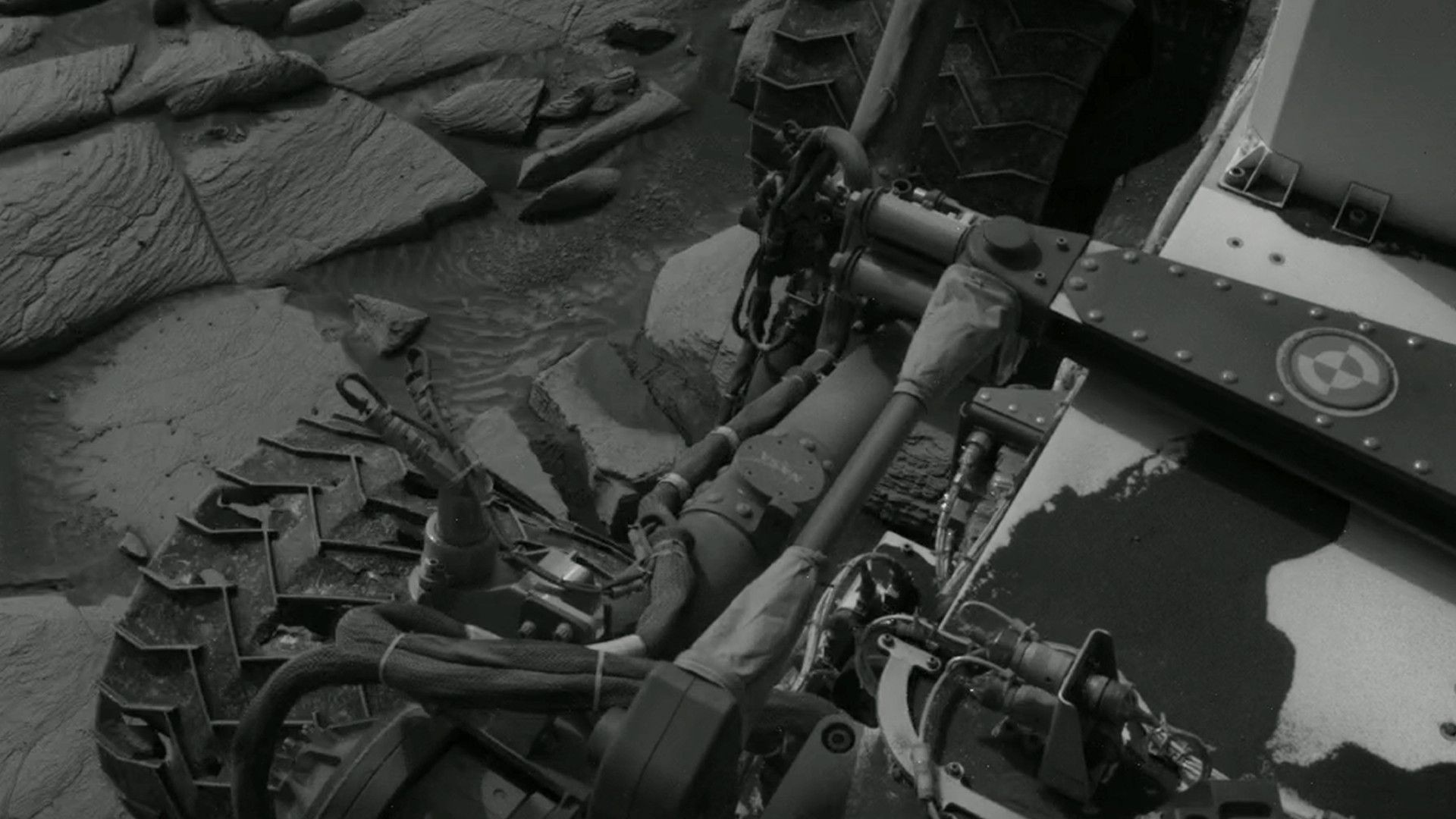
A new time-lapse video from NASA’s Curiosity rover offers a stark visual record of the physical toll of exploring the Red Planet. Compressing more than six years of driving—spanning from early 2020 to 2026—into just two minutes, the footage reveals the relentless churn of aluminum wheels against rugged terrain. While visually striking, this compilation serves a dual purpose: it documents the mechanical wear and tear of long-term exploration while providing scientists with unexpected data on Martian atmospheric conditions.
More Than Just Motion: Reading the Wind
The video was captured by Curiosity’s right navigation camera, which typically points backward during drives to help mission teams identify geological features after the rover passes them. By stitching together thousands of these routine images, engineers created a continuous record that highlights subtle environmental shifts.
Key Insight: The footage allows scientists to distinguish between sand displaced by the rover’s wheels and sand moved by wind gusts. This distinction provides critical data on seasonal changes in Mars’s thin atmosphere.
By analyzing how sand accumulates and shifts across the rover’s deck, researchers can isolate wind-driven patterns from mechanical disturbance. This capability transforms a simple navigation tool into a sensitive atmospheric monitor, offering new insights into planetary weather cycles.
The Cost of Exploration: Wear and Tear
The time-lapse also underscores the harsh reality of Martian geology. Curiosity’s six wheels, each approximately 20 inches (50 centimeters) in diameter, were engineered to handle uneven ground. However, the Martian surface has proven significantly more abrasive than anticipated.
- Early Damage: Shortly after landing in 2012, engineers observed punctures and tears in the thin aluminum wheels caused by jagged rocks.
- Cumulative Effects: Images released in 2024 revealed fresh scars alongside older damage, including deep gashes cutting through the wheel skin.
- Resilience: Despite this extensive damage, Curiosity remains fully mobile. This endurance is a testament to both its robust initial design and the careful route-planning strategies employed by mission engineers.
To mitigate further damage, the mission team plots routes that avoid particularly hazardous terrain whenever possible. These lessons have directly influenced the design of subsequent missions, including the Perseverance rover, whose wheels were reinforced to better withstand the planet’s unforgiving surface.
A Journey Beyond Expectations
The significance of this video extends beyond mechanics; it encapsulates a mission that has far exceeded its original two-year lifespan. Since landing, Curiosity has traveled more than 20 miles (32 kilometers) across Gale Crater, ascending the lower slopes of Mount Sharp. Each rotation of the battered, dust-coated wheels marks progress through rock layers that record billions of years of Martian history.
This longevity has yielded profound scientific returns. Curiosity has fundamentally reshaped our understanding of Mars by:
1. Confirming that ancient environments in Gale Crater could have supported microbial life.
2. Identifying evidence of long-lived lakes.
3. Measuring key chemical ingredients for life.
4. Detecting increasingly complex organic molecules preserved in Martian rocks.
Conclusion
The new time-lapse video is more than a cinematic achievement; it is a physical testament to the resilience of human engineering and the richness of scientific discovery. As Curiosity’s wheels continue to turn, they carry with them not just the rover, but the accumulated knowledge of a world once thought barren, proving that the journey itself yields invaluable data.