For decades, astronomers have debated a fundamental question: Is Venus still volcanically active? While the planet’s surface was once thought to have been reshaped by a single, massive volcanic event 500 million years ago, emerging evidence suggests a much more dynamic reality.
New research indicates that the techniques used to monitor Earth’s most powerful volcanoes—specifically the 2022 eruption of Mauna Loa in Hawaii—could provide the roadmap for identifying active lava flows on Venus.
The Mystery of the Venusian Surface
Venus is a world defined by fire. Radar imagery has identified over 85,000 volcanoes across its surface, and the planet’s atmosphere contains high levels of carbon dioxide, sulfur dioxide, and molecular nitrogen—gases often associated with volcanic activity.
However, direct evidence, such as visible volcanic plumes, remains elusive. This creates a significant scientific gap: without knowing how long lava remains hot and flowing, scientists cannot easily distinguish between ancient, cooled rock and fresh, active eruptions when looking at distant planets.
Lessons from Mauna Loa
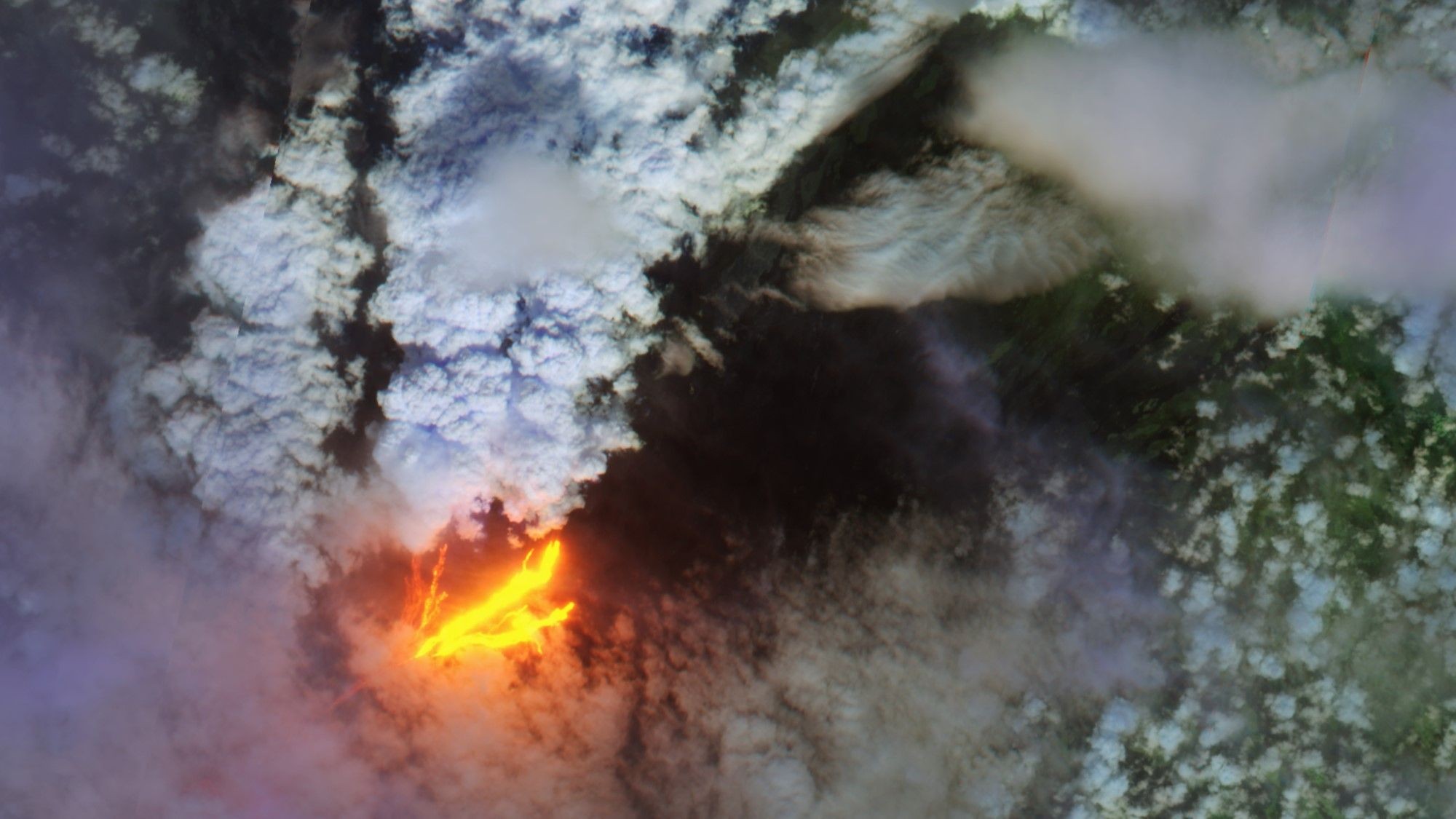
To bridge this gap, geologist Ian Flynn and his team turned to one of Earth’s most active volcanic sites: Mauna Loa, Hawaii. During its 2022 eruption, researchers utilized a combination of government-funded and privately owned satellite data to track the movement of lava.
This study yielded two critical breakthroughs that have direct implications for planetary exploration:
1. Predicting Eruptions via Machine Learning
By analyzing data leading up to the 2022 event, researchers used machine learning to identify a buildup of underground heat approximately one month before the eruption began. While predicting volcanic explosions remains one of geology’s greatest challenges, this finding suggests that thermal patterns may offer a way to forecast activity.
2. Moving from 2D to 3D
Satellite imagery typically provides a flat, two-dimensional view of a landscape. However, the thickness of a lava flow is a vital variable; it determines how much material is being released and how long the flow will last before cooling.
By collaborating with experts in glacial measurement, the team successfully converted 2D satellite images into 3D models. They discovered that:
– Lava flows thicker than 20 meters (66 feet) took approximately 21 months to cool.
– Understanding these cooling rates allows scientists to work backward from a temperature reading to determine the age and composition of the lava.
The Future of Venus Exploration
This methodology is set to become a cornerstone of upcoming space missions. NASA’s VERITAS mission, planned for launch in the early 2030s, aims to map the surface of Venus with unprecedented precision.
If VERITAS detects thermal signatures on Venus, the “cooling models” developed from the Mauna Loa data will be essential. They will allow scientists to determine if they are witnessing a brand-new eruption or the dying embers of an old one, ultimately revealing whether Venus is a geologically “dead” world or a living, breathing planet.
“Knowing how lava cools enables scientists to better constrain our models when we find active volcanoes on other planets.”
Conclusion: By mastering the physics of lava cooling on Earth, scientists are building the analytical toolkit necessary to decode the volcanic history—and current activity—of Venus.