It arrived quietly on September 27, 2019. No fanfare. Just Brady Corbet’s film sitting there, waiting for people to figure out what they were watching. Vox Lux isn’t a movie you simply watch. You survive it. It stars Natalie Portman. And Jude Law. Two heavy hitters. But they aren’t playing heroes. They are playing pieces in a machine that eats young women and spits out content.
This isn’t a traditional biopic. It’s a fiction that feels painfully real. A chronicling of how fame transforms a person until the person is gone. The film captures the specific hunger of the 1980s. Then it shows how that hunger mutates through the decades. It tracks the evolution of consumption. Not just of goods. But of human beings.
The Two Faces of Celestine Rowe
Portman plays the same character at two different stages of life. It’s a jarring experience. You see the girl. Then you see the woman. And the gap between them is where the horror lives.
In the beginning, she is Celestine. A teenager. Traumatized. Broken by a school shooting that kills her family and her sister. The event is the catalyst. It creates a void. And into that void steps the industry.
Jude Law plays Stephen Rees. A music manager. He sees potential in her pain. He doesn’t comfort her. He monetizes her. He turns her grief into a hit song. This is the engine of the film. It’s about how we turn tragedy into product.
“Fame is not a destination. It is a virus.”
From Gritty Drama to Neon Nightmare
The film splits into two acts. Roughly. The first half is grounded. Dark. Gritty. It feels like an indie drama about survival. You care about Celestine. You want her to heal.
Then the title card changes. The color palette shifts. The soundtrack gets heavier. The editing gets faster.
Now we are in the present. Celestine is a pop icon. A global brand. She is rich. She is famous. She is completely hollow.
This transition is key. It mirrors the shift in pop culture itself. The raw emotion of the 80s is replaced by polished perfection. The soul is stripped away. What remains is image. Pure image.
Portman’s performance here is fascinating. She doesn’t act like a sad girl. She acts like a ghost. A woman who has forgotten how to feel. She moves through luxury hotels and sold-out arenas like she is sleepwalking.
The Soundtrack as a Character
Don’t ignore the music. The score by Santigold and Scott Walker is not just background. It’s a weapon. It screams. It bleeds. It matches the internal chaos of the character.
The songs Celestine writes in the 80s are raw. Punk-adjacent. Angry. By the time she is an adult, her music is corporate. Safe. Designed for streaming algorithms. This shift tells you everything you need to know about her journey. She didn’t just grow up. She was processed.
Why This Film Matters Now
We live in a world

Brady Corbet’s Polarizing Vision
You might recognize Brady Corbet from his acting turns in Melancholia, Funny Games, or Mysterious Skin. He’s been on the fringes of indie cinema for years. But his real statement arrived in 2015. The Childhood of a Leader marked his directorial debut. It swept the Venice Film Festival, taking home the Best Director prize. That film was a stark, political portrait of the early 20th century.
His second feature, Vox Lux, continues that trajectory. It doesn’t just hint at political themes. It frames them as an unavoidable part of the 21st-century aesthetic.
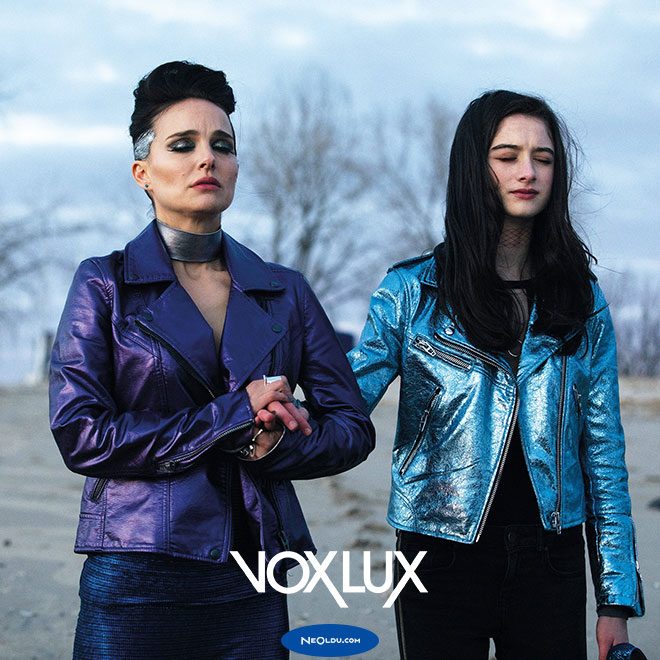

How ‘Vox Lux’ Dramatizes the Rise of a Pop Star
In Vox Lux, Natalie Portman isn’t just acting. She’s inhabiting a caricature of fame so sharp it cuts.
Director Brady Corbet uses this role to dissect something specific. The sudden, violent rise of Celeste. It starts with trauma. A school shooting. Celeste survives by luck alone. Then she sings a song about it.
The country listens.
Suddenly, she’s not a grieving girl. She’s a brand. A national symbol. Corbet doesn’t just show us this shift. He dramatizes the details. The way the public consumes her pain. The way she becomes institutionalized by her own stardom. It’s brutal. It’s beautiful. And it’s entirely about what happens when a tragedy becomes a product.
The label floating around Vox Lux is “satirical fictional biography.” It’s a catchy phrase, but it’s also slightly misleading if you take it literally. At its center sits a girl whose psyche is fractured by the very public traumas of her time—witnessing a mass shooting as a child, then spiraling into fame as a pop star. The film follows her. It tracks her rise. But here’s the thing: the movie isn’t her biography. It’s a story that uses her as a lens.
Think about that distinction. A biography implies a comprehensive look at a life. A biography explains why she became who she is in a linear, logical way. Vox Lux doesn’t do that. It’s impressionistic. It’s messy. It’s a caricature of celebrity culture wrapped in a neon-soaked nightmare.
The Girl vs. The Narrative
Riley Keough plays Celeste, the child witness. You see her grief raw and unfiltered. Then, jump forward. Natalie Portman takes over as the adult star. The transition isn’t smooth. It’s jarring by design. The film refuses to give you a tidy arc of healing or growth. Instead, it shows the erosion of a person under the weight of expectation, media scrutiny, and personal decay.
Why does this matter? Because the film is less interested in Celeste the individual and more interested in Celeste the icon. The trauma isn’t a plot point to be resolved. It’s the fuel. The public events—the shooting, the protests, the political climate—they don’t just happen to her. They happen through her. She becomes a vessel for collective anxiety.
Pop Culture as a Horror Story
Let’s be clear. This isn’t a music biopic. It’s not Love & Mercy or I’m Still Here. It’s closer to a fever dream. The soundtrack by Hilltop Hoods and Sia drives the narrative, but the music feels manufactured, hollow. That’s the point. The film critiques the machine that eats young women alive and spits out a polished product.
- The aesthetic : Neon lights, shaky cam, rapid cuts.
- The tone : Detached, cynical, almost cruel.
- The protagonist : Someone who loses her humanity to maintain her brand.
You watch Celeste navigate her career with a sense of growing dissociation. The fame isn’t empowering. It’s isolating. The film asks: What happens when a child’s trauma is commodified? When the world wants to consume your pain but only in digestible, marketable doses?
The Unresolved Ending
The story doesn’t wrap up with a lesson. There’s no redemption arc. There’s just more noise. More lights. More screaming. The final images are stark, leaving you with the image of a woman who has become a ghost in her own life.
It’s unsettling. It’s supposed to be. You leave the screening not knowing who Celeste really is, but feeling exactly what the film is about: the hollow echo of fame. That’s the power of the story. It doesn’t tell you everything. It makes you feel the void.
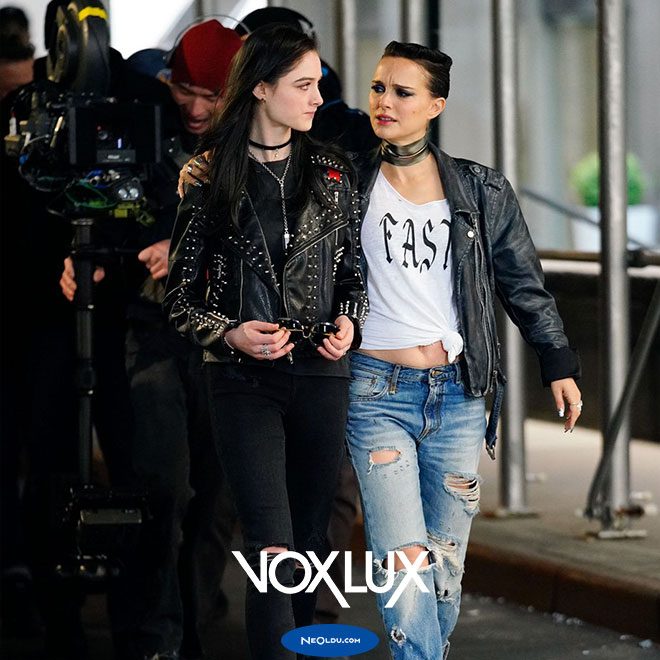
Breaking Form with Staccato Editing and Deliberate Pacing
Vox Lux refuses to behave like a standard biopic. It is jarring. The editing is sharp, almost aggressive in its cuts. It skips over the expected emotional beats. It doesn’t hold your hand through the grief. Instead, it thrusts you into the chaos of a young girl growing up under the weight of fame.
The film’s structure isn’t just stylistic flair. It mirrors Celeste’s descent. The disjointed narrative feels like a fractured psyche. You aren’t watching a linear rise to stardom. You’re watching a loss of self.
Natalie Portman and Stacy Martin as Two Halves of One Soul
Casting choices here are deliberate, not accidental. Natalie Portman plays the older Celeste. Stacy Martin plays the younger version. They don’t look alike. They don’t even move alike. That’s the point.
The split casting reinforces the idea that Celeste is a brand, not a person.
Portman’s Celeste is cold. Detached. She’s a creature of the industry. Martin’s Celeste is raw. Confused. Vulnerable. The film uses this duality to show how fame erases humanity. It’s not about transformation. It’s about replacement.
The Concert Sequence: A Critique of Length and Purpose
Then there’s the concert scene. It goes on. And on.
Critics called it unnecessary. They called it bloated. And sure, it drags. But dragging is the message. It forces the audience to sit in the discomfort. To feel the artificiality of the performance. It’s not a musical interlude. It’s a psychological trap.
Why did they include it? To show the emptiness of the spectacle. To make you question why you’re watching. It’s long because the illusion is long. And the illusion is a lie.
Does the Unconventional Style Serve the Story?
Some viewers wanted a straightforward drama. They wanted tears. They wanted closure. Vox Lux doesn’t give those things. It gives you a mirror. And the reflection is distorted.
Is it better this way? Maybe. It’s certainly more memorable. The film lingers. Not because of its plot. But because of its refusal to follow the rules.
Celeste’s character isn’t just evil. She’s a product. And the film treats her as one. The sharp cuts. The distant performances. The endless concert. All of it points to the same truth.
We’re not watching a girl become a star. We’re watching a star consume a girl. And the camera doesn’t blink.
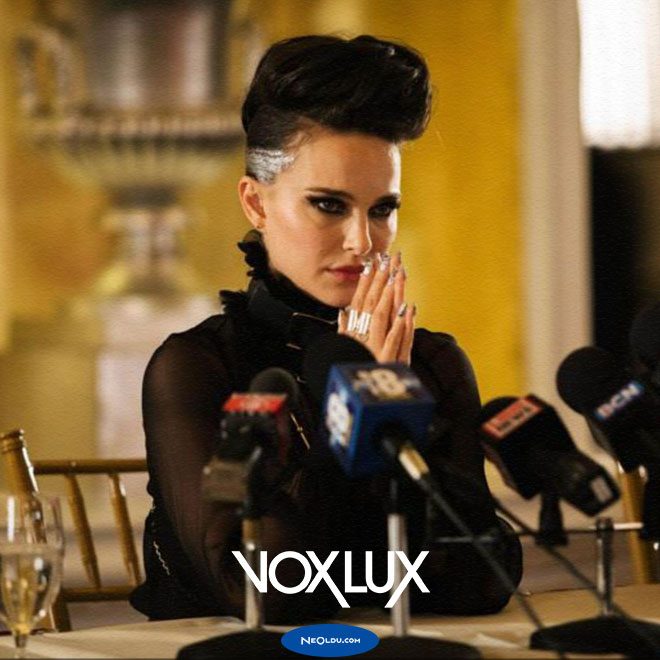
The Religion of Fame: Why Vox Lux Feels Like a Cult
If you strip away the glitter and the high-fashion couture, Vox Lux is less a traditional movie and more a study in sacred geometry gone wrong. The film doesn’t just use symbols; it worships them. Every frame is loaded with iconography that mimics the structure of religious dogma, turning the celebrity machine into a twisted church.
This approach didn’t appear out of thin air. The aesthetic draws heavily from the playbook of Madonna and Lady Gaga, two pop titans who mastered the art of turning stardom into a belief system. But where they offer spectacle, Vox Lux offers satire—albeit a very stylish one.
Borrowing the Holy Script
The connection to these icons is structural. Think about how Madonna used her persona to challenge societal norms through performance art. Or how Lady Gaga treats her fanbase like a congregation, complete with rituals and shared mantras. Vox Lux takes that template and asks what happens when the faith becomes hollow.
“It’s not just about being famous. It’s about being believed in.”
The film critiques this dynamic by showing how easily adoration can curdle into obsession. It mirrors the way pop culture figures have historically used religious metaphors to elevate themselves above mortal constraints. But in Vox Lux, the scripture is written by the paparazzi, and the sermon is delivered through tabloid headlines.
Symbols Over Substance
Notice the recurring visual motifs. The cross. The halo. The martyr-like suffering of the protagonist, Celeste. These aren’t accidental. They’re deliberate nods to the way fame functions as a substitute for spiritual fulfillment. The movie suggests that we’ve replaced God with the spotlight, and the results are equally destructive.
So when you watch Vox Lux, look past the outfits. Look for the altar. It’s built right there in the background, made of broken cameras and sold-out tickets. And if you squint, you might just see the ghost of Madonna waving from the wings, holding a script that looks suspiciously like her own biography.
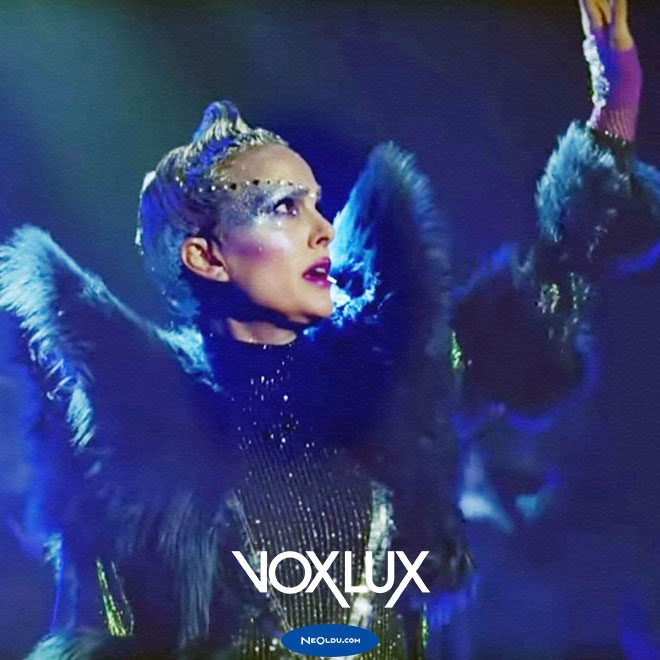
Natalie Portman’s Chameleon Transformation in ‘Music’
Natalie Portman doesn’t just play Celeste. She absorbs her. The performance charts a jagged arc from wide-eyed innocence to a soul sold to the devil, executed with a precision that feels less like acting and more like possession.
The Visual and Sonic Impact
The look is stark. Iconic hair. Heavy makeup. It’s a deliberate design choice that turns the character into a living symbol rather than just a person.
And then there’s the sound. Sia wrote the original songs. But Portman lends her own voice to the tracklist.
“She doesn’t sing Sia’s melodies directly in the narrative sense, but through the performance, the character towers over the screen.”
Even without belting out every note as her own, the combination of Portman’s delivery and Sia’s compositions creates a sonic wall. On screen, she becomes a deity. A pop culture titan. The performance swells until it feels like she’s consuming the entire frame.
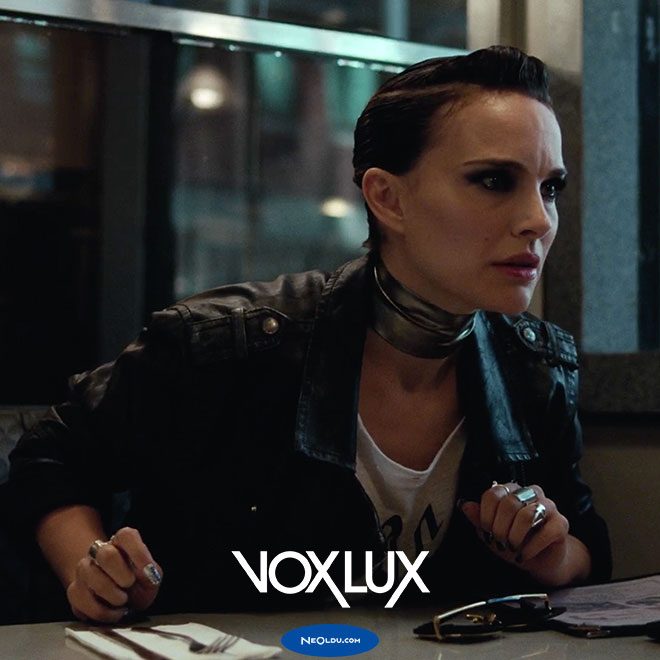
The 15-Minute Concert Scene That Divided Vox Lux Audiences
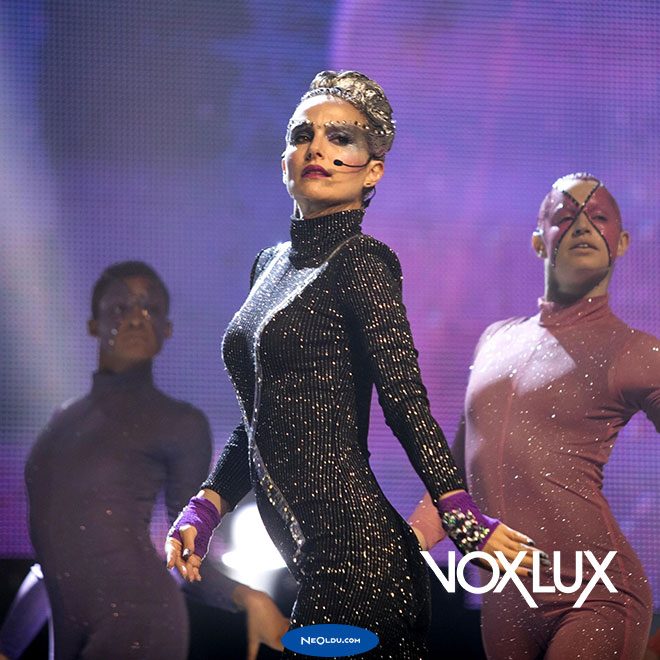
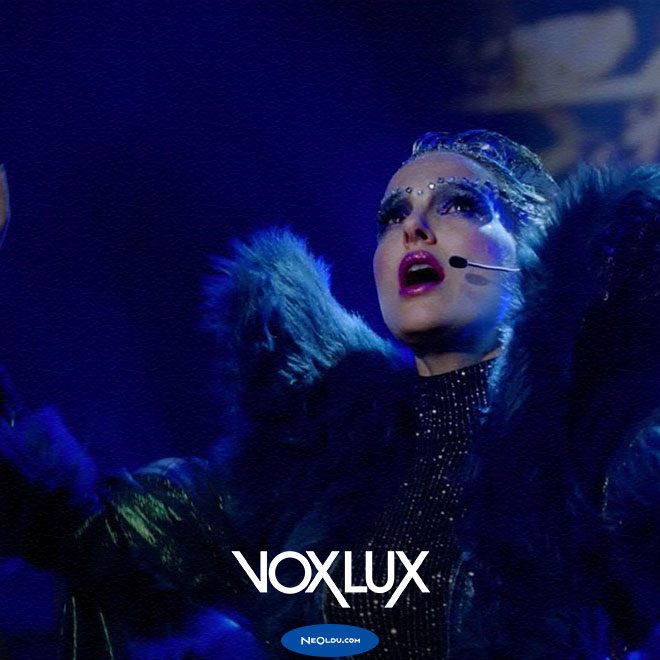
That extended concert sequence at the end of Vox Lux didn’t just happen. It was a statement. And for many viewers, it was a hard pass. Fifteen minutes of stage lights, choreography, and Natalie Portman’s Celeste walking through it like a ghost. Critics and fans split down the middle. Some called it pretentious padding. Others saw it as the only way to tell this specific story.
It wasn’t just a performance. It was a deconstruction.
The camera angles shift constantly. Harsh spotlights cut through darkness. Celeste is filmed from dozens of perspectives, turning her into something less like a person and more like a product. Director Brady Corbet uses this visual overload to make a point about the industry’s appetite for spectacle.
“The lavishly decorated set and the spectacle of money spent on dancers and pyrotechnics serve as a subtle critique.”
This isn’t accidental. The fifteen-minute segment is where the film stops hiding its intentions. It shines a light on what Celeste has become. A brand. A vessel for corporate interests. The “special girl” from the beginning is now just another face in the machine, polished and repackaged for mass consumption.
The disconnect between the glitter and the reality is the entire point. Celeste stands there, smiling, waving, while the world around her screams for more. It’s exhausting to watch. It’s supposed to be.
Corbet forces you to sit in that discomfort. To watch the machinery of fame grind down an individual until nothing is left but the image. The dance numbers aren’t just filler. They’re the trap.
And once you’re in it, there’s no easy way out.
The Cost of Keeping Up
It’s not just about the red carpet. It’s about the infrastructure.
The public sees the glamour. The receipts show the overhead. A single outfit can run upwards of $50,000 when you factor in the designer fees, the alterations, and the insurance for a garment that has never been worn before. And that’s just the main event.
Then there is the team. A celebrity doesn’t walk onto a set alone. They bring an army.
The Hidden Logistics
Consider the entourage. It’s rarely just a stylist. You’re looking at a PR handler who needs to be on call 24/7. A makeup artist who travels with her own lighting equipment. A hair stylist who requires a private space for touch-ups. Add in assistants, security, and sometimes even chefs or trainers, and the daily burn rate skyrockets.
“The image is a product. And like any product, it requires significant R&D and marketing spend to keep it relevant.”
This isn’t vanity. It’s brand management.
Why the Spending Isn’t Optional
If you’re wondering why they don’t just wear what they already own, the answer lies in optics. In the attention economy, being seen wearing the same designer label twice in a month can look stale. Or worse, cheap.
Celebrities operate in a visual industry. Their face and style are their currency. If the currency depreciates, the deals dry up. A missed opportunity at a festival can cost them a multi-million dollar endorsement deal. The outfit is cheap compared to the lost revenue.
The Counterfeit Economy
This spending fuels a black market. The demand for “dupe” culture is high. Fans want to look like their idols without paying the price. This has led to a surge in high-quality counterfeit goods. But for the stars, authenticity is everything. You can’t wear a replica on the Met Gala. The risk of being called out is too high.
The pressure to maintain this level of visibility creates a cycle. They spend to look good. Looking good brings money. The money allows them to spend more. It’s a treadmill that never stops.
The Aftermath of the Event
Once the flashbulbs fade, the clothes go back. They don’t stay with the star. They’re returned to the designers, often with tags still attached. The real value isn’t in ownership. It’s in the association.
The star gets the clout. The designer gets the exposure. The public gets the fantasy.
But who pays the bill?
Usually, the brands loan the items. But sometimes, especially for younger stars trying to establish their own taste, they buy. And when they buy, they often sell the items later through auctions or private sales. It’s a way to recoup costs. A $10,000 dress might fetch $15,000 if it has enough provenance.
It’s a business. Just a very shiny one.