Almost every living thing on Earth runs on solar power. It’s not just a nice bonus; it’s the engine. Plants and algae, equipped with chlorophyll, act as the machinery that converts this raw energy into something tangible. They take simple ingredients—water and carbon dioxide—and forge complex organic molecules. This process, known as photosynthesis, is the foundation of the food web. Without it, the energy from the sun would just bounce off the planet. Instead, it gets locked into chemical bonds, ready to be eaten, burned, or decayed.
The Solar-to-Cell Conversion
How exactly does light become life? The key lies in chlorophyll. This green pigment captures photons and uses that energy to split water molecules. It’s a violent, energetic event at the molecular level. The hydrogen from water helps reduce carbon dioxide into sugar. That sugar is glucose. It’s the primary fuel for plant cells. And because animals eat plants (or eat things that ate plants), that solar energy moves up the chain.
The efficiency isn’t perfect. A lot of energy is lost as heat. But the portion that sticks? It powers everything from a blooming rose to a migrating whale. The sun provides the input. Photosynthesis provides the output. Everything in between is just storage and transfer.
Why Carbon Dioxide Matters
You might think of carbon dioxide as a pollutant. In this context, it’s an ingredient. Plants pull it from the air. They strip away the oxygen and keep the carbon. That carbon builds the structure of the plant. It forms cellulose, lignin, and the complex carbohydrates we rely on. The oxygen released as a byproduct? That’s what we breathe. It’s a trade-off. Plants get food. We get air.
This exchange defines the atmosphere. Without it, the air would be unbreathable. The climate would be drastically different. Photosynthesis isn’t just a biological curiosity. It’s a planetary service. It regulates heat. It creates oxygen. It builds biomass.
Beyond the Garden
The scope is vast. Algae in the ocean produce more oxygen than all the forests combined. They are the unseen workers of the biosphere. Forests are the visible ones. Both perform the same basic trick. They turn light into matter.
Consider the implications. If photosynthesis stops, the food chain collapses. Not gradually. Instantly. The energy source is cut off. No new organic molecules are made. Existing ones are consumed and gone. The result is starvation. For everything.
So, next time you see a green leaf, look closer. It’s a factory. A solar panel. A life-support system. It’s working right now. Converting invisible radiation into visible growth. The sun shines. The plant absorbs. The cycle continues. It’s simple. It’s essential. And it’s happening everywhere you look.
Plants have it easy. They grab sunlight and turn it into sugar. Animals? Not so much.
We lack chlorophyll. That green pigment is the secret sauce for photosynthesis, and without it, we can’t make our own energy from thin air. Instead, we are locked into a different system. We survive by eating things that do have that green magic. It’s a simple rule with massive consequences.
This dependency creates what ecologists call food webs. It’s not a straight line. It’s a messy, tangled net of who eats whom. At the bottom, you have the producers. These are the organisms—mostly plants and algae—that capture solar energy and lock it into chemical bonds. They are the foundation.
Above them sit the consumers. These are the animals. We don’t pull power from the sun. We steal it. We get our energy through predation. Or, if we’re feeling a bit more parasitic, through sheer exploitation.
The Flow of Stolen Energy
Think about it. You eat a salad. You are stealing the sun’s energy that the lettuce captured. You eat a chicken. The chicken ate grain that captured the sun. You are two steps removed from the source.
This transfer isn’t 100% efficient. A lot of energy gets lost as heat or used for basic life functions. That’s why food chains are rarely longer than four or five levels. By the time you reach the top predator, most of the original solar energy is gone.
Predation drives this whole mechanism. Lions eat zebras. Zebras eat grass. The energy flows upward. But it’s not just about eating. It’s about who holds the power.
Parasites and Hidden Connections
Not all consumers hunt. Some prefer to tag along. Parasitism is another way to tap into the energy grid without the mess of a full meal. Ticks on deer. Tapeworms in mammals. They siphon off resources, keeping the host alive just long enough to keep the energy flowing.
These relationships matter. They regulate populations. They keep ecosystems from collapsing under their own weight. Without these connections, the web frays.
Why It Matters for Us
We often think of nature as separate from our daily lives. It isn’t. Every meal we eat traces back to that initial solar capture. Our entire energy infrastructure—whether biological or industrial—relies on this same principle. We are all, in the end, solar batteries charged by other living things.
The web holds us all. Break one strand, and the tension shifts.
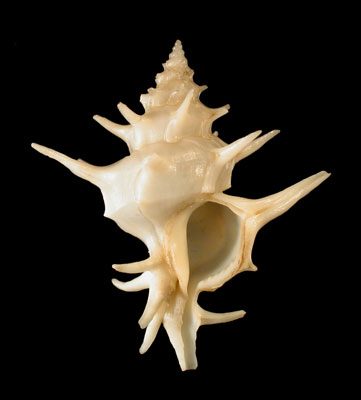
It turns out that almost all mollusks operate as consumers in the most direct sense. They eat green plants. Or they eat things that have already eaten green plants. This food chain logic is simple, but the implications for understanding their role in ecosystems are anything but.
Grazing on the bottom
Think about the typical garden snail or the oyster in your shell dish. They aren’t hunting in the traditional sense. They are browsing. Some scrape algae off rocks. Others filter tiny phytoplankton from the water. These organisms are chlorophyll-based. They create energy from sunlight. Mollusks sit right above them in the hierarchy.
This makes them primary consumers. They bridge the gap between plant life and higher predators. Without them, the energy captured by plants wouldn’t move up the chain efficiently.
The indirect eaters
Not every mollusk is a direct grazer. Some are carnivores. But even then, the roots go back to chlorophyll. A crab-eating octopus eats crabs. Those crabs likely ate algae or smaller animals that ate algae. The energy still traces back to those green, photosynthetic organisms.
This means the entire mollusk class is tethered to the base of the food web. Change the plant life, and you ripple effects through every species that relies on them. It’s a delicate balance.
Why this matters now
As ocean acidification and habitat loss threaten marine plant life, the foundation shifts. If chlorophyll-based organisms decline, mollusk populations suffer. And that affects everything else. Fisheries collapse. Water quality changes. The simple act of eating plants becomes a complex ecological indicator.
Understanding this diet isn’t just biology trivia. It’s a map of dependency. And right now, that map is getting redrawn.
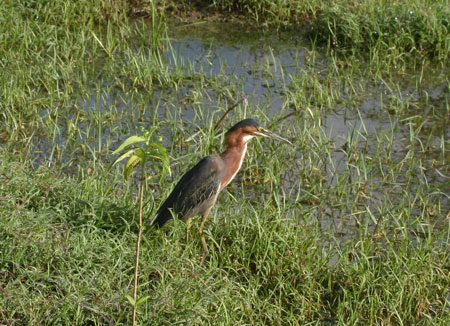
Who eats a shell?
It is not complicated. Mollusks are on the menu. For a wide variety of animals, they are just another source of protein. The food chain is straightforward here.
In the ocean, crustaceans go after them. Fish do too. Some mollusks even eat other mollusks. It is a circular problem for the shelled creatures.
Freshwater habitats are different. Here, aquatic insects hunt them. This happens in both larval and adult stages. Other invertebrates join the feast. So do certain fish species.
Land is another battlefield. Birds pick at them. Mammals dig them up. Humans are included in that list. We are just one of many predators.
Mollusks serve as a primary food source across marine, freshwater, and terrestrial ecosystems.
The diversity of predators is the real story. It is not just one type of animal. It spans entire classes. From tiny larvae to large mammals. The mollusk is a central node in many food webs.
This pressure shapes their evolution. Shells get harder. Camouflage gets better. Hiding spots become more important. They have to adapt or disappear.
But the menu does not stop there. Some animals have specialized ways to crack open shells. Others use brute force. The variety of hunting strategies is endless.
It raises a simple question. How many lives depend on a soft body protected by calcium?
The answer is many. Too many to count. The impact of losing a single mollusk species can ripple outward. Predators starve. Ecosystems shift.
There is no safety in numbers. Not really. Each individual is a potential meal. That is just how nature works.
And we are part of that cycle. Always have been. Always will be.
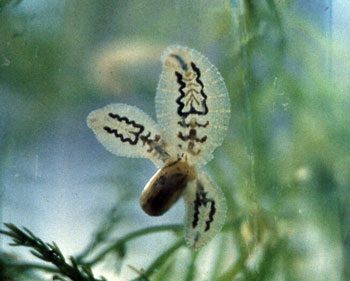
Evolution is a brutal editor. It cuts the weak and keeps what survives. For creatures that can’t run, the editing process looks different. It isn’t about speed. It’s about armor. Or poison. Or disappearing acts.
Marine gastropods and bivalves offer a masterclass in survival for the immobile. They are stuck in one spot, more or less. Predators find them easily. So they had to get creative. The results are a weird, wonderful array of physical adaptations. Things that range from sprinting capabilities to carapaces thick enough to stop a bullet.
The Architecture of Survival
Look at a clam. Or a snail. On the surface, they are simple. Underneath, the engineering is complex. They didn’t evolve muscles for sprinting. They evolved structures for defense.
Consider the bivalve. It lives buried in sediment or attached to rocks. It can’t flee. Instead, it builds a wall. Two shells, hinged together. Tight. When danger approaches, it clamps shut. The muscles inside are powerful. They create a seal that is hard to break. Some shells are lined with nacre. Mother of pearl. It’s smooth. Slippery. Hard for a predator to get a grip.
Gastropods are slightly more mobile. They glide. But they are still slow. Their solution is often chemical. Or physical.
Some shells are lined with nacre. Mother of pearl. It’s smooth. Slippery. Hard for a predator to get a grip.
Take the cone snail. It doesn’t run. It waits. It has a harpoon-like tooth. It injects venom. Fast. Potent. The predator doesn’t see the snail coming. Or rather, the snail doesn’t see the predator. It strikes first. This is a different kind of defense. Not hiding. Not hardening. But outsmarting.
Camouflage as a Defense Strategy
Not all adaptations are hard. Some are soft. Invisible.
Cephalopods are mollusks too. They are gastropods in a broad sense? No. They are their own class. But they share the marine mollusk body plan. And they are the kings of camouflage. They don’t have shells. They have skin that changes color. Texture. Shape.
Why? Because they are soft. They are prey. So they became ghosts.
This is not just color change. It is structural color. They control chromatophores. Pigment cells. They expand or contract them. Instantly. They match the background. Sand. Coral. Seaweed. A predator looks right past them.
This is why cephalopods are so interesting. They prove that defense doesn’t always mean a wall. Sometimes it means being nothing at all.
The Cost of Armor
Building a shell takes energy. Calcium carbonate. It’s heavy. It’s metabolically expensive. Why do some mollusks keep their shells thin? Or lose them entirely?
Because speed matters. Even a little.
Some snails have evolved to be faster than others. They can move when threatened. Not fast by human standards. But fast enough to hide. Or to avoid a slow-moving predator.
The trade-off is clear. Thick shell.
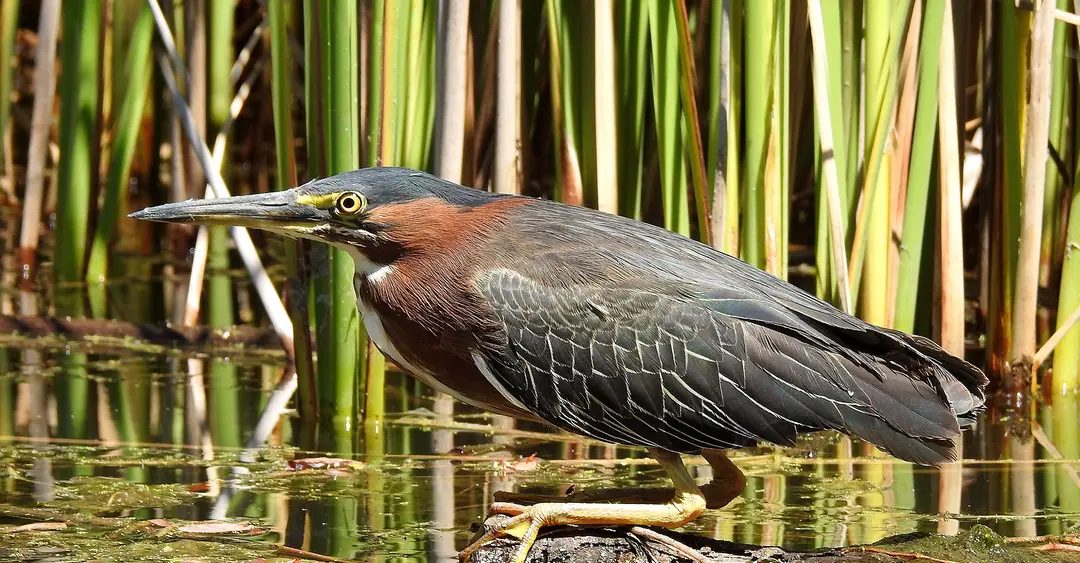
The Shell Strategy: Armor as a Last Line of Defense
When you think about how nature shields its inhabitants, the first image that usually comes to mind is a shell. It is the most obvious, brute-force approach to survival. Protection by shell morphology isn’t just about having a hard exterior; it’s about engineering. Mollusks don’t just grow calcium carbonate; they build complex, interlocking structures that distribute force. If a crab clamps down, the shell redirects that pressure rather than cracking under it.
This strategy is essentially a physical barrier. It works because it is predictable. Predators know what a shell looks like, and they know they have to be strong enough to break it. But for the animal inside, the trade-off is clear. You are safe from the outside, but you are also heavy. You are slow. You carry your house on your back.
Recent research into glass inspired by seashells suggests we might be able to mimic this. Scientists found that the way nacre (mother-of-pearl) layers are stacked creates a material 200 times tougher than the minerals it’s made of. We are still learning how to replicate this at scale, but the principle remains the same: structure beats raw hardness.
Camouflage: Disappearing Act
Then there is the opposite approach. Instead of building a fortress, some animals choose to become invisible. Protection by camouflage relies on blending in. It is a psychological trick as much as a physical one. If a predator cannot see you, it cannot hunt you.
The stick insect is the textbook example. It doesn’t just look like a twig; it moves like one. It sways with the wind. It has the texture of bark. This is phasmid camouflage, and it requires an immense amount of energy to maintain the illusion. You have to be still. You have to be patient.
But it’s not just about looking like your background. It’s about timing. Some creatures change their appearance based on the light. Others, like the octopus, shift color in real-time. This is where the line between biology and technology blurs. How the chameleon changes color is often misunderstood—it’s not just for hiding; it’s for communication. But for the prey species, the goal is simple: become part of the furniture.
Exhibitionism: The Bold Counter-Strategy
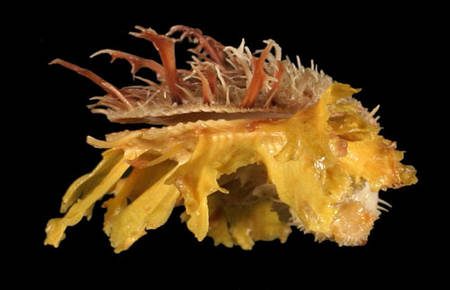
Here is where things get weird. Not all animals try to hide. Some of them scream, Look at me! This is protection by exhibitionism, or as we might call it, aposematism (warning coloration). It sounds contradictory. Why would you want to be seen?
The logic is brutal but simple: I am poisonous. I am dangerous. Do not eat me.
By displaying bright, contrasting colors—reds, yellows, blacks—these animals advertise their toxicity. It is a contract between predator and prey. The predator learns, quickly and painfully, to avoid that color pattern. The prey survives because it is memorable.
This strategy is common in toxic seafood and other marine life. The color of the organism is its billboard. It’s a high-risk, high-reward game. If you are bluffing, you die. If you are honest, you live. And because the predators learn to avoid the pattern