If you grew up in the U.S. after the 1940s, you probably know the drill. Kryptonite is bad news for Superman. Most folks also have a vague idea that it comes in different colors, mostly because Buffy the Vampire Slayer spent a lot of screen time obsessing over a glowing green rock. But ask a serious comic book historian, and you’ll get a headache. Over nearly 70 years of radio dramas, TV shows, movies, and endless comic runs, the lore has shifted wildly. It depends entirely on who wrote the script and which era you’re digging into.
So, what exactly is this radioactive mineral? Where did it come from, and why does it matter? How does a retcon change everything? We’re going to break down the science, the history, and the chaos.
To understand the rock, you have to understand the man. Or rather, the alien. Superman’s home planet, Krypton, orbited a red giant star named Rao, located roughly 50 light-years from Earth. Krypton was massive. Bigger than Earth. That meant gravity was crushing. In the late 1930s comics, Kryptonians were born with superpowers because of this extreme environment. But in the modern canon? They’re just normal people. Superman is only “super” because Earth’s gravity is weak and our sun, Sol, is yellow. It’s a solar battery effect.
Then Krypton blew up.
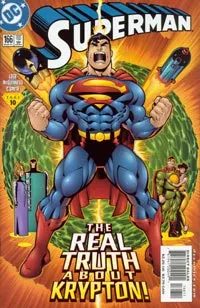
The reasons for the apocalypse have changed more times than Superman’s underwear color. Early stories blamed a uranium core meltdown. Superman #166 (2002) suggested the planet drifted too close to Rao, and the red giant’s gravity ripped it apart. The current favorite theory? A civil war. A doomsday device called the Destroyer triggered the chain reaction.
Kryptonite and Radioactive Decay
The explosion didn’t just destroy a planet; it scattered debris across the solar system. That debris is kryptonite.
In the earliest comics, kryptonite wasn’t just a plot device; it was a logical consequence of Krypton’s composition. If Kryptonians absorbed radiation from Rao, their bodies became sensitive to that specific energy spectrum. Earth’s yellow sun floods them with energy. Kryptonite emits the same radiation Rao did. It’s a biological override.
But here’s where it gets messy. Writers realized that if kryptonite is just Kryptonian waste product, it should be everywhere. So they had to invent rules. Why is it rare? Why doesn’t it kill humans? And why does it come in so many colors?
The answer lies in radioactive decay and retcons.
A retcon is a retroactive continuity change. It’s when an author rewrites past events to fit a new story. Kryptonite is the king of retcons. What started as a simple green rock that made Superman weak became a complex family of minerals. Some variants are harmless. Others are lethal to humans. Some cause mutations. It depends on the writer’s mood and the decade’s scientific understanding.
In the 1950s, kryptonite was mostly green. It weakened Superman. That was it. Simple. By the 1980s, writers needed new stakes. They introduced red kryptonite. It didn’t weaken him; it made him act crazy. Blue kryptonite affected Kryptonians from a different planet with a blue sun. Yellow kryptonite? That’s for when the sun is yellow but the Kryptonian is from a different system. It’s a mess.
“Kryptonite isn’t a mineral. It’s a narrative tool.”
This variety serves a purpose
When Krypton blew apart, the debris didn’t just vanish into the void. Jor-El and Lara strapped their infant son, Kal-El, into a birthing matrix and launched him toward Earth. Kansas farmers Martha and Jonathan Kent found the pod, raised him as Clark, and eventually, he became Superman. But the journey left a trail of destruction.
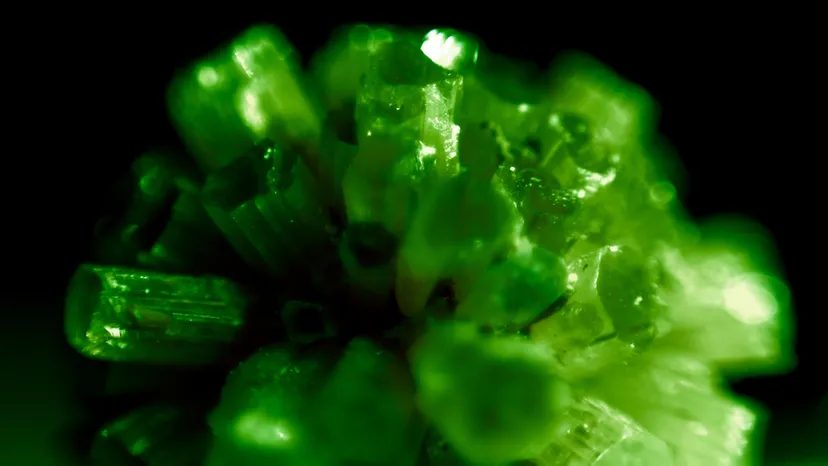
The radioactive fallout from Krypton’s explosion condensed into fragments that hitched a ride in the matrix’s wake. This debris became what we know as Green Kryptonite. It is the ultimate weakness for Kryptonians. The rock doesn’t combust in Earth’s atmosphere because it doesn’t react with oxygen. But it isn’t indestructible either. You can cut it. Chip it. Crush it. Dissolve it in acid.
The damage it does is swift.
Exposure to green kryptonite drains a Kryptonian’s strength instantly. Stay exposed too long, and you die. Why? The interaction between the rock’s radiation and Kryptonian cells triggers a fatal biological failure. To understand that failure, you have to look at how radiation actually works on Earth.
Understanding Ionizing Radiation
Earth has its own radioactive elements. They emit energy through three main processes.
First is alpha decay. An unstable atom’s nucleus spits out alpha particles. These are heavy chunks made of two protons and two neutrons.
Second is beta decay. A neutron inside the nucleus turns into a proton, an electron, and an antineutrino. The atom ejects the electron (becoming a beta particle) and the antineutrino.
Third is spontaneous fission. The atom splits into two different elements, sometimes releasing neutrinos in the process.
These decays leave atoms with excess energy. They release it as gamma rays. Gamma rays are electromagnetic pulses. They are pure energy, not matter. X-rays are similar. Both forms create ionizing radiation, which strips electrons from atoms.
Alpha and beta particles are weak penetrators. They stop at skin or paper. Gamma rays and X-rays are different. They punch through matter. Human bodies included. By knocking electrons loose, they damage DNA, causing cell mutations and cancer. Lead blocks them effectively due to its high electron density. The rays can’t get through the dense web of electrons in the metal.
Is Kryptonite Radiation Real?
Kryptonite emits radiation, but its atomic decay is unknown. The properties, however, are telling. Like gamma or X-ray radiation, kryptonite radiation penetrates objects and living tissue. It cannot penetrate lead.
This behavior suggests kryptonite radiation is electromagnetic energy, similar to gamma rays, rather than particle-based radiation like alpha or beta decay. If you want to know how kryptonite affects Superman, the answer lies in this electromagnetic interaction disrupting cellular function. It isn’t magic. It’s physics gone wrong.
What Is Your Real-Life Kryptonite?
The word has escaped the comics. In common parlance, “kryptonite” means something you cannot abide. Something that defeats you.
I hate ghosts. I’m terrified of airplanes.
An informal email poll of HowStuffWorks staffers revealed their personal kryptonites. The list was varied.
-
Tall ladders
-
Curry and bridges
-
Bell peppers
-
Small talk
-
Andie MacDowell and cilantro
-
Crappy comic book movie adaptations
-
Email chains
It’s a convenient metaphor for human vulnerability. Superman has a green rock. We have things that make us uncomfortable, or scared, or just plain weak.
The power of kryptonite isn’t just in the rock. It’s in the exposure.
How Green Kryptonite Blocks Solar Power
When Green Kryptonite touches Superman, the effect is immediate and brutal. He doesn’t just get tired. He gets weak. If the exposure lasts long enough, it’s fatal. The reason lies in a cellular betrayal.
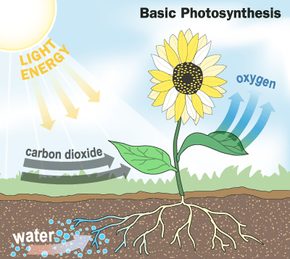
Think of Superman as a walking solar panel. His cells act like photovoltaic units, soaking up energy from Earth’s yellow sun. In a standard solar cell, light hits a semiconductor like silicon. That energy kicks electrons loose, creating a current. Superman’s biology does something similar. He stores that solar juice.
You could also look at it like a plant. Through photosynthesis, flora uses sunlight to flip carbon dioxide and water into sugar and oxygen. Superman’s cells apparently use solar energy to fuel his flight, strength, and heat vision.
Which analogy holds up? The comics never commit. Nor do they explain why a yellow star is the magic ingredient while a red sun leaves him grounded. Rao, his home star, was a red giant. It’s bigger and brighter than our sun, though a bit cooler. A red dwarf would make the physics simple—yellow stars are just hotter and more energetic. But Rao isn’t a red dwarf. It’s a mystery why yellow light triggers the upgrade when red light doesn’t. We know he needs the yellow spectrum. We just don’t know why.
So, how does Green Kryptonite break the circuit?
There are a few theories floating around the lore:
- The kryptonite radiation might simply crowd out the solar radiation Superman relies on.
- It could be ionizing radiation that strips electrons from his cells, halting the electrical flow that powers his abilities.
- It might interfere with some unknown organic process that keeps his physiology in superhero mode.
The result is the same. The solar input stops. The output drops. He loses the powers. He starts dying.
The Evolution of the Solar Battery
Early Superman stories didn’t bother with science. He was just from another planet. Strong because he was alien. Period. No explanation for the strength, the invulnerability, or the vision.
Later writers got specific. They blamed gravity. Krypton had high gravity, so its inhabitants evolved to be tough. Earth’s lower gravity meant Superman could jump buildings and lift cars without breaking a sweat.
Then came the sun.
The narrative shifted. It wasn’t just about bone density and muscle mass. It was about energy. The Earth’s yellow sun charged his batteries. This explanation stuck because it created a natural limiter. It gave him a weakness that wasn’t just “kryptonite is bad.” It made him dependent on a specific type of star light.
This dependency is what makes Green Kryptonite so effective. It doesn’t just attack his body. It cuts off his power source. If the sun is the fuel, kryptonite is the plug puller.
From Radio Static to Green Glow
We tend to think of Green Kryptonite as the immutable law of the universe, the radioactive rock that keeps the Man of Steel in check. It’s everywhere. But it wasn’t always part of the lore, and certainly not green. The origin story is messy, rooted in union negotiations rather than cosmic destiny.
The concept actually started as a substance called K-metal in an unpublished 1940s Superman comic script. That draft never saw print. Instead, the real debut happened on the radio waves. In 1943, the “Superman” radio series needed a plot device. Voice actor Bud Collyer was exhausted. The producers needed a way to give him a break without dropping the show. So they wrote in Kryptonite. It incapacitated Superman so Collyer could take a vacation while other actors mimicked his distress.
It wasn’t until 1949 that the substance hit the printed page in Superman #61. That’s a decade after Action Comics #1. By then, radio scripts and movie serials had already introduced it, showing it in red, grey, metallic, and yes, green. The comic book artists eventually just picked green. It stuck.
Isotopes and Anomalies
Green Kryptonite is the baseline. It’s the most common form. But the lore expanded. Writers started playing with isotopes. These are different versions of the same element, varying by atomic structure and potency. They affect biology differently, mostly by disrupting cellular function.
Some variants were one-off gags. Others became plot staples. Here is how the randomness played out:
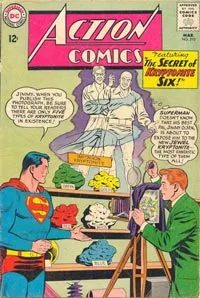
- Jewel Kryptonite : Found in Action Comics #310. This was Kryptonite 6. It didn’t hurt Superman; it boosted the powers of Kryptonians who were stuck in the Phantom Zone.
- X-Kryptonite : Appeared in Action Comics #261. This is the stuff that gave a cat named Streaky superpowers. Not exactly a world-ending threat, but it made for a fun sidekick.
- Kryptonite Plus : An extra-potent strain that showed up in two major story arcs. Stronger, meaner, more radioactive.
It’s a messy taxonomy. Different writers, different rules. The common thread is cellular disruption. But the results range from death to enhanced abilities to a flying feline.
The Word Before the Thing
Here is a detail most fans miss. The word “kryptonite” appeared in print before the radioactive mineral did.
In 1940, Daisy Corporation released a tie-in toy for the Red Ryder air rifle. They called it the Krypto-Raygun. The advertising copy claimed it was made from “KRYPTONITE, the amazing metal from his birthplace.”
So the brand name existed before the comic book canon caught up. Daisy sold the dream of alien metal years before Jerry Siegel and Joe Shuster formalized the plot device. The toy ads were ahead of the curve. You can see the original packaging if you visit the Daisy Museum. It’s a strange piece of pop culture archaeology. A plastic gun claiming to be made of alien ore.
Retcons and Realities
By the 1970s, Kryptonite was cluttering up the narrative. Criminals were carrying chunks of it in their pockets like spare change. It lost its menace. The writers tried to fix it.
In Superman #233, an experiment gone wrong turned all the Green Kryptonite on Earth into iron. Harmless. In Superman #255, they removed it from the rest of the universe entirely. For a while, Superman was invulnerable again. But the plot holes were getting too big. The writers brought it back. Of course they did. He’s Superman. He needs the rock.
Then came 1985.
Crisis on Infinite Earths changed everything. This miniseries was a massive retcon (retroactive continuity). It wasn’t just a new story; it rewrote history. The DC Universe, previously a multiverse of infinite parallel worlds, was collapsed into a single, streamlined reality. The goal was to clean up decades of continuity errors and redundant characters.
The post-Crisis universe is the way things “always” worked. In this new timeline, Kryptonite became rarer. The endless varieties were scaled back. Fewer isotopes. Less clutter.
They tried it again later with Infinite Crisis, another retcon attempt. But it didn’t shift the needle on Kryptonite’s role. The mineral remained a key, rare plot device. Not a common currency for thugs. Just enough to hurt, not enough to kill the character.
The Legacy of Green
Why do we still care about the specific shade of green? Because it’s the anchor.
The variations—Jewel, X, Plus, Gold, Blue, White—are fascinating for completionists. They show how writers experimented with the rules. But Green Kryptonite remains the primary weakness. It’s the most abundant. It’s the most frequently used. It’s the one that appears in the movies, the shows, the games.
The history is a bit chaotic. Radio actors taking breaks. Toys making false claims. Comic books erasing and rewriting their own pasts. But through all the retcons, the green rock stays. It’s the constant in a variable equation.
Superman flies. The rock falls. The hero weakens. It’s a cycle that started with a voice actor’s need for a day off and ended up defining a superhero genre. The details change. The rock remains.