
Streamlining is useless in space. You won’t find sleek, aerodynamic curves on a satellite. The vacuum of space offers zero air resistance. So why do early sci-fi depictions always show torpedo-shaped ships? Pure fiction. Real spacecraft are built in whatever shape the mission demands.
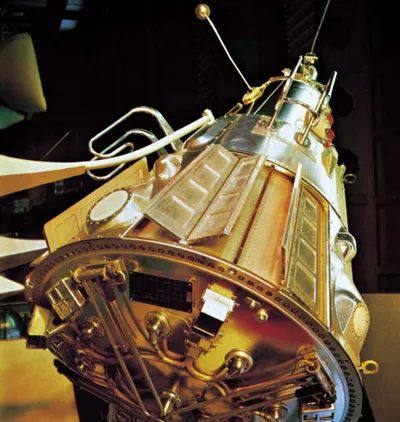
The first one to break the mold was Sputnik 1. The Soviet Union launched it on October 4, 1957. It was a polished metal sphere. It weighed 83.6 kg. That’s 184 pounds. It wasn’t designed for beauty. It was designed to beep and orbit.
It wasn’t alone for long. Unmanned probes from both the Soviet Union and the U.S. followed quickly. The focus was simple: get off the ground. Prove it could be done.
Then came humans.
April 12, 1961. Vostok 1. It carried Yury Gagarin. That was the first manned spacecraft. Four years after Sputnik. The timeline is tight. The ambition was huge.
Since then, the fleet has grown. Thousands of missions. Manned and unmanned. The goals shifted. We stopped just asking if we could. We started asking what we could do with it.
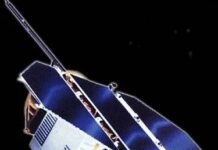
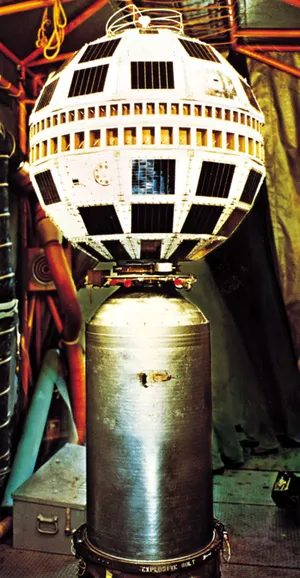
“Spacecraft are designed with a variety of shapes depending on the mission.”
Scientific knowledge increased. National security got a boost. But the everyday impact matters most. Think about your phone. The weather forecast on your screen. The GPS guiding your car. The global phone call that doesn’t drop.
Telecommunications. Weather forecasting. National security. These aren’t just buzzwords. They’re the reason the hardware exists. The sphere didn’t just orbit Earth. It changed how we live on it.
We look up and see stars. Engineers look up and see orbits. The vehicle doesn’t matter as much as the signal it carries.
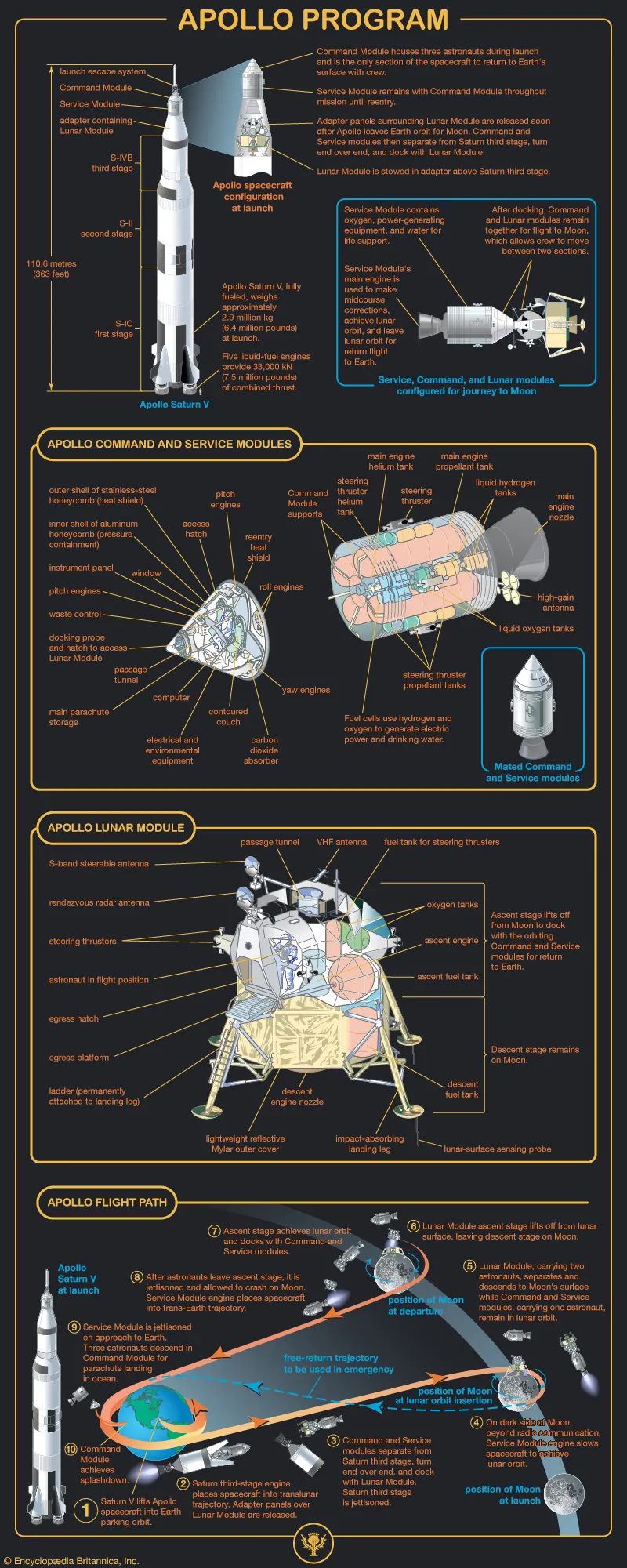




Most spacecraft don’t have the muscle to get themselves off the ground. They are passengers, not drivers. The heavy lifting is done entirely by the launch vehicle. Once that boost stage burns out, it drops away. The spacecraft is left drifting with whatever velocity it gained from that initial push.
It’s a simple transfer of momentum. If the launch provided enough speed, the craft enters orbit around Earth. If it got a bigger kick, it escapes Earth’s gravity entirely. From there, it’s coasting toward another destination. Mars? The Moon? Deep space? The engine room is quiet.
But quiet doesn’t mean stopped. Spacecraft aren’t just dead weights floating in the void. They carry their own small rocket engines for maneuvering. These thrusters handle orientation. They keep the solar panels facing the sun. They adjust the trajectory when things go slightly off-script.
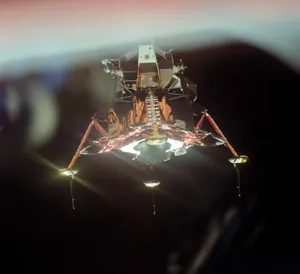
Consider the Apollo program. It wasn’t just one big rocket. It was a system of specialized vehicles working in a deadly dance. The Lunar Module was the specific tool for the ground game. It had its own engines. These allowed it to descend softly onto the lunar surface. It touched down. It waited. Then those same engines fired again to lift the astronauts off the moon.
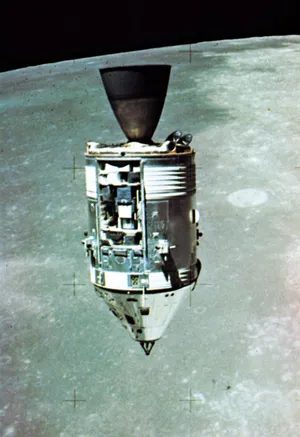
They had to get back to the Command Module. That craft was waiting in lunar orbit. It wasn’t just a shell. It had a Service Module attached. This was the power plant for the return trip. It carried enough fuel to leave lunar orbit and fire back toward Earth. Without that attached thrust, the crew would be stranded.
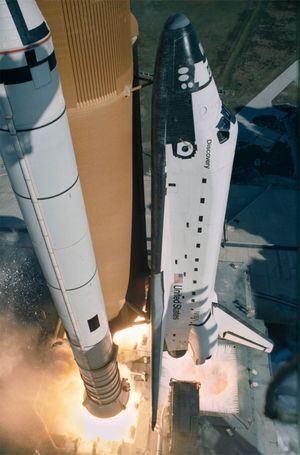
The U.S. Space Shuttle took a different approach to getting off the planet. It wasn’t a single stage. It was a complex stack. The orbiter carried three main liquid-fuel engines. But those weren’t enough on their own. They relied on a disposable external tank for fuel. They also attached a pair of solid-fuel boosters.
This combination provided the brute force needed to reach space. Once in orbit, the external tank and boosters were discarded. The orbiter continued on its own. It used its own engines for re-entry and landing. The logic is consistent across erations. You get there fast with big rockets. You navigate with small ones. You survive by managing the momentum you were given.
Why do we bother with the small thrusters if the big rocket does the work? Because space is big. And objects are small. A slight drift in velocity means missing your target by thousands of miles. The precision of the small engines matters just as much as the power of the launch vehicle. One gets you close. The other ensures you arrive.
The shuttle’s design was ambitious. It tried to combine the power of a rocket with the reusability of a plane. It worked, for a while. But the physics remained the same. Momentum is king. Control is queen. Without the initial velocity, you go nowhere. Without the small adjustments, you go somewhere else entirely.

Earth-orbiting satellites have it easy. They bask in sunlight. Solar panels catch the photons, pumping electrons into storage batteries. It is a reliable loop. Stay in orbit long enough, and the sun becomes your infinite battery. The Space Shuttle, however, operated on a different schedule. Its missions lasted only weeks. It needed high power for short bursts. Hydrogen-oxygen fuel cells handled that job. They combine propellant to create electricity and water. Clean. Efficient. Gone after fourteen days.
But what happens when the sun is a distant star?
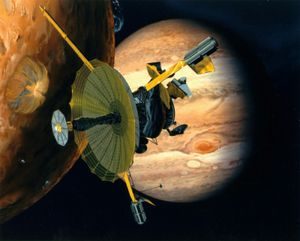
Deep-space probes face a different reality. Beyond Mars, sunlight is too weak for solar cells to be practical. The Galileo probe arrived at Jupiter in 1995. Cassini launched for Saturn in 1997. These missions traveled far from the sun. They needed power that lasted for years, independent of solar intensity. They used radioisotope thermoelectric generators (RTGs).
An RTG is simple physics. It uses heat. Specifically, the decay of radioactive material like plutonium-238. That decay generates steady warmth. Thermocouples convert that heat directly into electricity. No moving parts. No gears. Just physics.
Why does this matter to you?
Because those probes did the heavy lifting for planetary science. Galileo mapped Jupiter’s atmosphere. Cassini studied Saturn’s rings and moons. They sent back data that reshaped our understanding of the solar system. All of it powered by a small, self-contained heat source. No solar arrays. No reliance on a star that is billions of miles away.
The design choice reflects the mission profile. Short trips? Fuel cells. Long orbits? Solar. Years in the dark? Radioisotopes. Each solution solves a specific problem. The constraint of distance drives the engineering. You cannot patch a battery pack in deep space. You have to build it right the first time.
That is the trade-off. Plutonium is expensive. It is heavy. It requires rigorous safety protocols during launch. But it works. Consistently. For decades.
The sun is a great partner for Earth orbit. It fails beyond the asteroid belt. That is when we turn to decay. To heat. To the quiet energy of unstable atoms.