Canada is burning. More than 900 blazes are raging across the country. They’ve torched some 28,000 square kilometers. They’ve forced thousands out of their homes.
And now, the smoke has blown south. Into the US. Into Trump’s face.
On Sunday, amidst the noise of the World Cup Final, US President Donald Trump didn’t just watch the game. He turned to Canadian Prime Minister Mark Carney. He looked him in the eye. And he issued a warning.
Trump said Canada needs to get the wildfires under control. Why? Because the smoke is “poisoning our air” in the US.
“If we can help them, we’ll help them,” Trump said. The tone was polite on the surface. But the implication was sharper. “But maybe they should pay some damages or something.”
It wasn’t the first time Trump floated the idea of charging Canada for the smoke’s impact. Last week, he threatened new tariffs. He called the cost “incalculable.” He posted the threat on social media while Washington DC and New York City were shrouded in gray haze.
Now, with smoke drifting across the eastern US, the diplomatic tempers are flaring.
Ontario premier calls out the threats
Doug Ford, Ontario’s premier, had little patience for the theatrics. On Monday, he told reporters that Trump should be offering support. Instead, he’s threatening tariffs.
Trump should offer “his closest allies and friends” aid rather than sitting there and issuing ultimatums.
The fires. The smoke. The tariffs. It’s all fueling a familiar tension. But Ford was done with the noise.
“I get frustrated just listening to a bunch of rubbish,” Ford told the press. He didn’t mince words. Canada has a history of helping its neighbor during disasters. Remember Hurricane Helene? Wildfires in California?
“Maybe one day you’re going to need our help,” Ford said.
Simple. Direct. A reminder of reciprocity. Or perhaps just a reminder that nature doesn’t care about trade deals.
The human cost of the smoke
Forget the geopolitics for a moment. Look at Ontario.
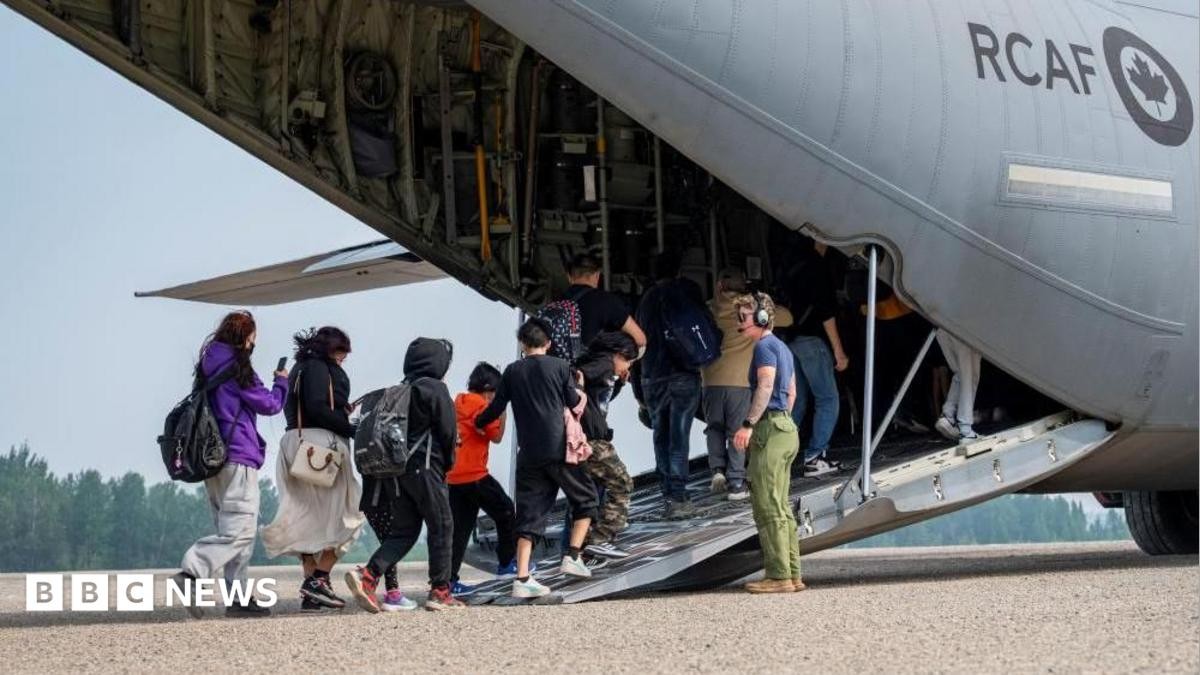
About 1,800 people were evacuated due to these wildfires. That’s families. Jobs. Lives.
In Whitewater Lake First Nation, the loss is deeper. The community is mostly seasonal camps. No full-time residents. But this weekend, it was burned over.
Chief Pauline Drake told CBC News that infrastructure is gone. Community homes. Personal property. All of it.
“It was full of beaches, sand beaches… good fishing, good hunting,” Drake said. “We had eagles that were always there.”
She didn’t finish the sentence. She didn’t need to. The wildlife is part of their upbringing. Now, she’s worried. “I don’t know how the wildlife is now.”
Ford visited Thunder Bay on the weekend. He promised to “do and spend whatever it takes” to protect people from the devastation. Money. Resources. Effort. The question is whether it’s enough.
Western alerts and massive mobilization
To the west, the situation is equally dire. In British Columbia, the city of Kimberley was placed under evacuation alert. Approximately 9,000 people were affected.
Prime Minister Carney responded on Sunday. He announced the mobilization of more than 5,000 fighters. Nearly 300 aircraft. Waterbombers. Helicopters. Evacuation planes.
“It’s an enormous, complex effort,” Carney said in a statement. “Ultimately depends on dedicated and brave individuals who work tirelessly to keep Canadians safe.”
Brave. Tirelessly. Those are the words.
But while Canada deploys resources, Trump looks for leverage.
The intersection of climate and politics
This isn’t just about fire. It’s about smoke. And smoke doesn’t respect borders. It moves with the wind. It lands on faces in New York just as surely as it coats forests in Ontario.
When does “help” become “debt”?
Trump wants damages. Ford wants respect. The firefighters want rain.
The 900 wildfires are a statistic. The 28,000 burned square kilometers is an area on a map. But the air in New York? You can taste it. You can cough it up. You can breathe it in until your lungs burn.
Will the tariffs stop the fire? No.
Will the smoke clear? Hopefully.
But until it does, the air will be heavy. And the political tension will be heavier.
Carney and Trump talked at a soccer game. That’s where the modern world lives now. Amidst distractions. Amidst spectacle. While the background burns.
The eagles in Whitewater Lake. The 9,000 in Kimberley. The 1,800 in Ontario. They don’t have time for rhetoric. They have time to survive.
And the rest of us? We’re left watching. Waiting for the wind to change.