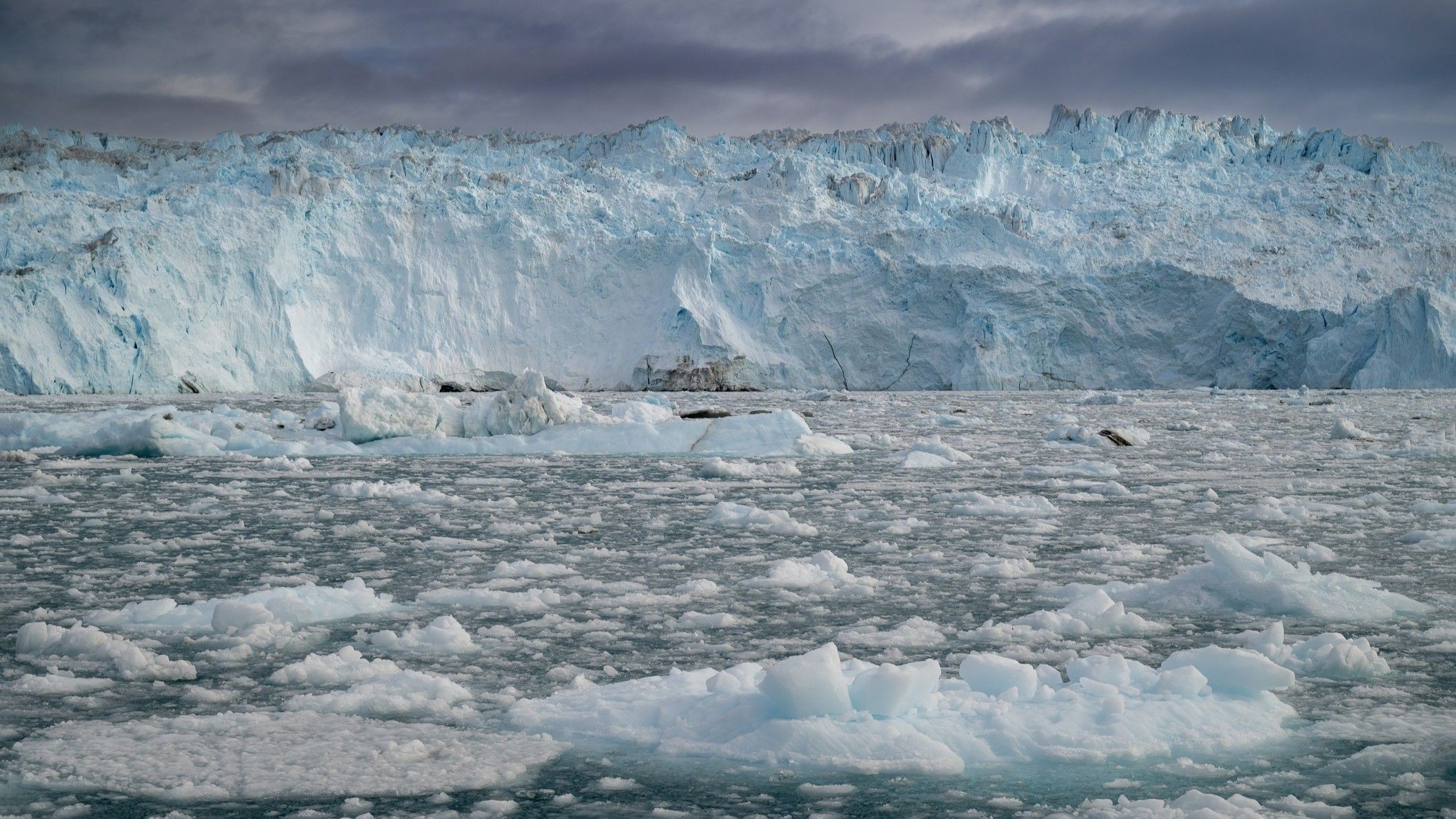
The Atlantic Meridional Overturning Currents (AMOC) are taking a hit. And Greenland is the one handing it out.
New research confirms that runoff from the melting ice sheet will drive a strong weakening, but not a shutdown, of these key ocean currents. That’s a distinction with a massive difference. It means we’re looking at severe disruption, not the abrupt, irreversible collapse that some earlier headlines screamed about.
By 2100, we’re expecting an additional 10% to 19% drop in AMOC strength due to Greenland’s meltwater alone. On top of the decline scientists already predict from general warming, that’s a serious punch to the gut.
The Mechanics of the Slowdown
How does ice turn into a current disruptor?
Simple physics. The AMOC works like a global conveyor belt. It moves warm water north and sinks cold, salty water in the North Atlantic, pulling the system along. Greenland is changing the recipe.
Massive amounts of fresh meltwater are pouring into the North Atlantic. Freshwater is less dense than salty water. It doesn’t sink. Instead, it sits on top, warming and diluting the surface layer. That blocks the deep water formation that powers the whole machine.
Most climate models have been sloppy about this. They include Arctic meltwater, sure. But Greenland’s runoff? Often ignored. Why? Because integrating the Greenland Ice Sheet requires specific, dynamic models that are resource-heavy to develop.
“We need a specific model for the Greenland ice sheet,” said Jost von Hardenberg from the Polytechnic University of Turin. “It requires a lot of resources.”
A Century of Melt
The study, published in Science Advances, used a global climate model called EC-EARTH3. Since the base model lacks Greenland, the team added the Community Ice Sheet Model version 2 to see what would happen.
The timeline is brutal.
Greenland doesn’t ramp up instantly. The melt stays relatively manageable until after 2100. Then? It accelerates hard.
“Greenland starts really melting strongly only that date,” von Hardenberg noted.
By 2300, if we keep pumping greenhouse gases into the atmosphere, Greenland’s ice sheet could account for 40% of the total AMOC weakening. The freshwater pulse becomes extremely strong, dominating the equation.
Most models missed this delayed spike. They underestimated the cumulative impact because they treated Greenland’s runoff as a minor footnote rather than a major driver in the 22nd century.
Recovery Is Possible (For Now)
Here is the twist.
Other studies have warned of a “tipping point.” Once the AMOC flips, it never comes back. This model says otherwise.
When von Hardenberg and his team switched off the meltwater in their simulation, the AMOC recovered. When they dialed down greenhouse gas emissions, the recovery was complete.
This suggests the circulation is more stable than feared. It doesn’t flip suddenly. It weakens. Gradually. Reversibly, if we act fast.
“It’s consistent with a strong weakening, But not a shutdown,” von Hardenberg said.
The AMOC remains robust. It can bounce back. But don’t mistake resilience for invincibility. The longer we wait, the harder it becomes to pull the plug on warming and restore balance.
The Debate on Robustness
Not everyone is ready to crow about stability.
Jonathan Baker, a senior climate scientist at the UK Met Office, pointed out that using only one model is a limitation. He agreed that Greenland’s melt adds uncertainty to future projections, but urged caution.
“Repeating these experiments across a wider range models will be important,” Baker said.
Nicholas Foucal from the University of Georgia disagrees. He finds the result robust. His logic? You need immense amounts of fresh water—far more than Greenland has—to truly crash the AMOC irreversibly.
But Sybren Drijfhout at the University of Southampton pushes back harder. He argues the model used might be too forgiving. Its parameters make the AMOC appear more resilient than it is in other simulations.
“Its outcomes are neither surprising nor should be be interpreted as exemplary for the whole Model ensemble,” Drijfhout warned.
Why It Matters
Whether you think the AMOC is stable or fragile, one thing is clear: ignoring Greenland is a mistake.
Integrating the ice sheet into climate models reduces uncertainty. It gives us better answers to critical questions. How much will the current decrease in different scenarios? What does that mean for Northwest Europe’s climate? Or droughts near the equator?
The next version of the EC-EARTH3 model will include Greenland. Von Hardenberg hopes to test the recovery results in other models, too. Encouraging results are just that—encouraging. They aren’t proof.
The melt is coming. The weakening is coming. The shutdown might not be. But the window to define our own future is shrinking with every passing year of emissions.
We get to choose whether that weakening reverses. Or stays.
The ice sheet is already speaking. Are we listening?