


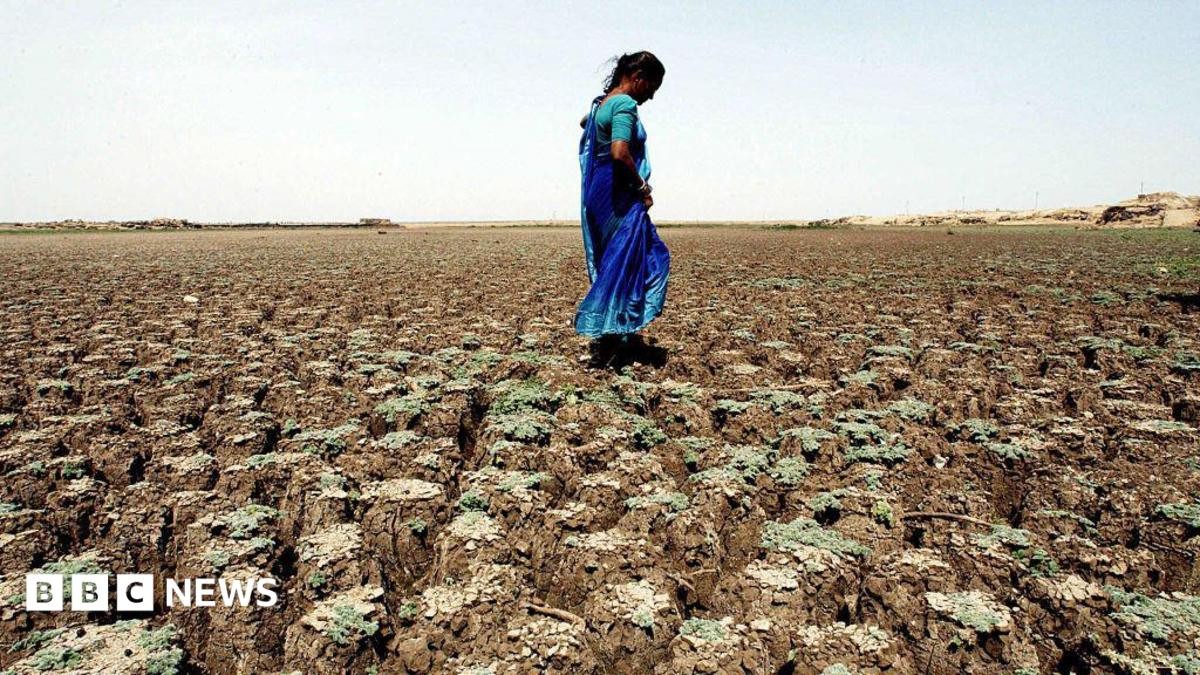
India just clocked its driest June in twelve years. Worse? It ranks fifth-driest since records began back in 1901. The India Meteorological Department didn’t mince words about it either—they’re forecasting below-normal rain for July too.
It raises the obvious question: what happens to the crops now?
A planting gap widens
Farmers don’t have long to wait for answers. Sowing areas have already shrunk. Government numbers show planted summer crop land is down nearly 23% compared to the same period in 2024—assuming that 2025 date in the prompt was a typo, which it logically must be for a year-over-year comparison. Rice specifically took a hit. A quarter drop.
Look at the raw data. Farmers covered 18.27 million hectacres by June 30. Last year, at that same date, it was 23.65. That is a massive gap on the ground.
Summer crops are big business. We are talking rice, cotton, pulses, sugarcane. All of them lean hard on the southwest monsoon. That weather system brings about 70% of the annual rain. Usually it hits Kerala right around June 1, then marches north.
Not this year.
The arrival was delayed by three days. The progress stalled for two weeks across western India. Fields couldn’t be prepared. Seeds stayed in bags.
Nearly half the country’s farmland relies almost entirely on rainfall because irrigation just isn’t there. Timing isn’t just convenient—it is existence.
Rice is the canary in the coal mine. Planting fell 25% this season. Only 2.58 million hectacres got rice seedlings. Compare that to 3.44 million a year ago. It is not close.
Oilseeds and imports
There is another ripple effect. Experts warn that weak rains will crush domestic oilseed production. Less local output means more imported edible oil. Bad news for trade balances and local farmers who might have otherwise sold that harvest.
Is everything lost?
No.
The monsoon lasts until September. There is time. Rain can pick back up. Farmers can scramble.
Also, India has stockpiled serious reserves. As of July 1, government rice stocks sat at 39.7 million tons. The required buffer is just 13.5. That cushion is nearly triple the requirement. Add in the 29.8 tons waiting to be milled from procured paddy, and the system has plenty of buffer to absorb the shock.
But a warehouse full of grain doesn’t put food in a farmer’s pocket when his own crop fails to sprout. The safety net holds, for now.
It will hold until the sky opens again.


