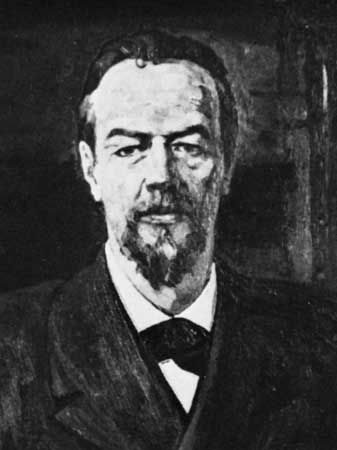
Aleksandr Popov is often remembered in Russia as the inventor of the radio. But the whole story is messier than the national myth suggests. Popov was born in 1859 in Turinskiye Rudniki, now Krasnoturinsk. He was a physicist and electrical engineer who built a primitive radio receiver in 1895. This was basically a lightning detector. He built it without knowing that Italian inventor Guglielmo Marconi was working on similar wireless technology at the time.
Did Popov invent the radio? This is a question that continues to spark debate. His experiments were real. His value is not seriously questioned. But history generally gives Marconi the upper hand. It’s not just about credit. It is about how science progresses in isolation and in a connected global network.
From Seminary to the Sea
Popov came from humble beginnings. His father was the village priest. Young Popov wanted to follow this example and enter a church seminary. He was going to take holy orders. But in 1877 he changed his mind. He was interested in mathematics. He studied at the University of St. Petersburg and graduated with honors in 1883.
He joined the faculty and taught mathematics and physics. He was on his way to a professorship. But his interests changed again. Electrical engineering demanded his attention. At that time, there were no universities in Russia where this subject was taught. So Popov took a job as an instructor at the Russian Navy Torpedo School in Kronstadt.
This was a strategic move. The school trained sailors to handle the electrical equipment of warships. It also gave Popov access to a well-stocked library and a proper laboratory. Finally, he was able to follow the development of science abroad. He read about the discovery of electromagnetic waves by the German physicist Heinrich Hertz. Popov realized that these waves could transmit signals over long distances. He began to work to receive them.
Lightning Detector and first transmission
In July 1895, Popov installed his device in the meteorological observatory of the St. Petersburg Forestry Institute. The device detected electrical disturbances in the atmosphere. It is designed to detect lightning.
A few months later he published an article. He suggested that the same device could receive signals from an artificial source. All it needed was a strong enough oscillator. The idea was radical. It moved from recognizing the chaos of nature to managing human communication.
Before this paper, on May 7, 1895, Popov had already demonstrated propagation. He performed in the Physicochemical Society of St. Petersburg. He presented the transfer of Hertzian waves between different parts of the university. There is evidence that he sent “Heinrich Hertz” in Morse code. The president of the club, who chaired the meeting, wrote the sound signs on the board. It was a working demonstration of wireless telegraphy.
A Detour into X-Rays
Popov did not stay on this path. In the academic year 1895-96, he got distracted. X-rays or X-rays had just been discovered. The medical and scientific world was buzzing. Popov became interested in setting up experiments for them. He put the lightning detector on hold. He changed his focus completely.
Then came September 1896. Popov read the first newspapers about Marconi’s demonstrations. It seems that neither man knew about the other. Marconi had his own experiments. Popov had his own. The similarities were great, but the paths were separate.
Racing Toward Communication
Marconi’s patent in June 1896 changed everything. That woke Popov up. He returned to his original work with renewed urgency. He was supported by the Russian Navy. They wanted wireless communication for their fleet.
By 1898, Popov and the fleet achieved a ship-to-shore communication at a distance of 10 kilometers. It was a practical victory. The distance increased to about 50 kilometers (30 mi) by the end of 1899. Popov also traveled to France and Germany. He visited their radio stations. He saw technology developing elsewhere.
Late recognition
The Russian government gave Popov remarkably little support during his lifetime. It took 50 years for the state to change course. By 1945, the political climate had changed. The Bolshoi Theater was full. In the audience sat scientists, marshals, admirals and leaders of the Communist Party. Popov’s daughter was on stage.
They are celebrating the 50th anniversary of Popov’s “invention of the radio”. It was announced that May 7th will now be celebrated as the day of radio. It was a massive correction from a historical oversight. But was it right?
Antenna advantage
It is agreed that Popov’s experimental work with Hertzian waves deserves recognition. However, it is not generally accepted that he invented radio communication. His description of his receiving device, published in January 1896, corresponds almost exactly to Marconi’s June 1896 patent claim. The timing is suspect.
However, Popov has a special claim to fame. He is considered the first to use an antenna to transmit and receive radio waves. This technical detail is important. It shows that he was thinking about the physics of signal propagation and not just the hum of communication.
Popov returned to St. Petersburg in 1901 as a professor at the Electrical Engineering Institute. He later became its director. He died five years later, on December 31, 1905. He never saw the global network he helped create.
Marconi received a patent. He gained fame. But Popov built the foundation in a vacuum out of a desire to understand the invisible waves around us. Does priority define the inventor or does independent discovery prove the inevitability of technology? The answer may be in the antenna itself. It connects the ground to the sky. It bridges the gap between the known and the possible. Popov stood on this bridge.