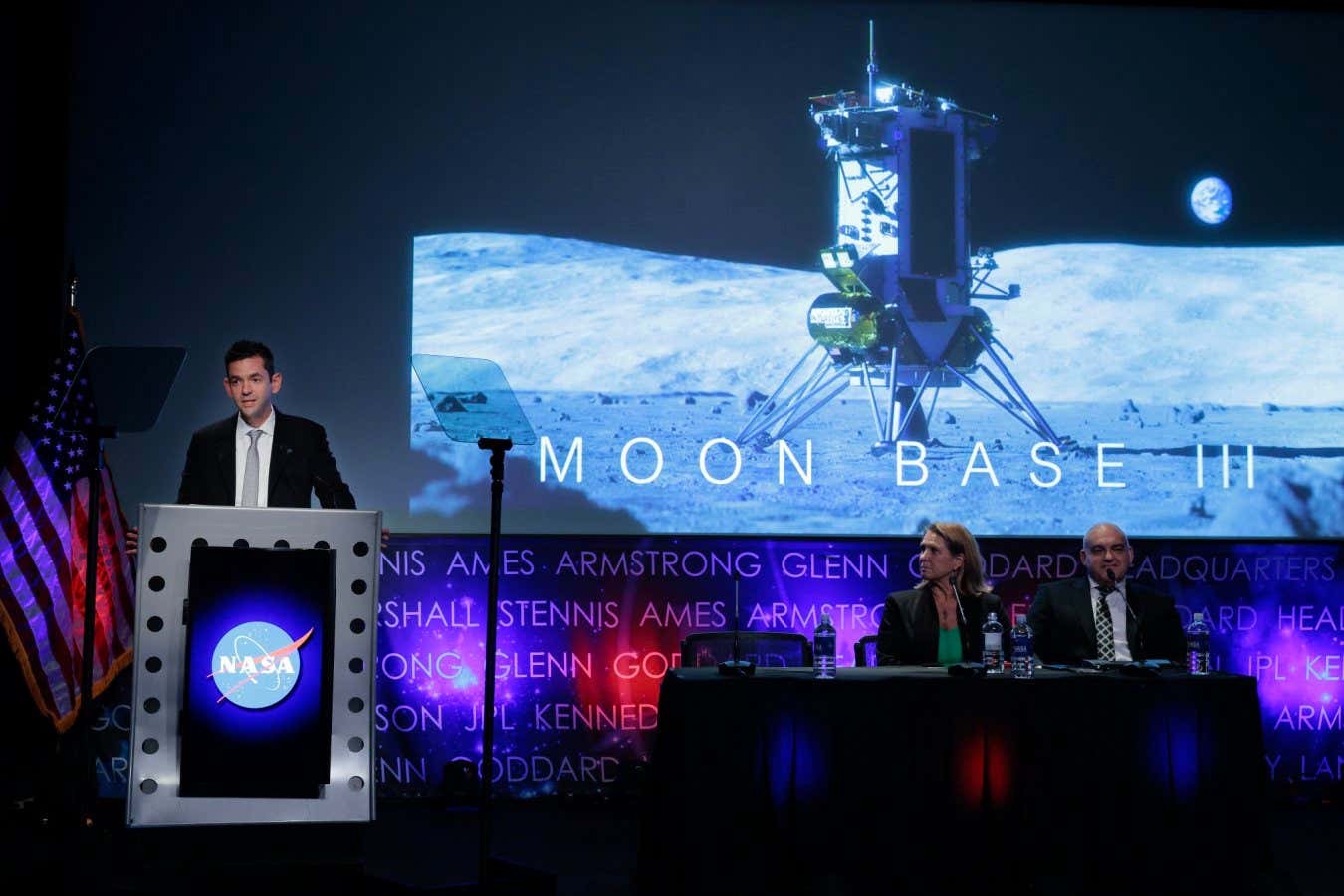
It starts with robots. Small, autonomous ones. Rovers. Hopping drones.
Then, much later, us.
NASA just put the details on the table. They aren’t just visiting the Moon anymore. They’re staying. Well, sort of. The goal is a permanent base. Hundreds of square kilometers of it. Hundreds. It sounds impossible, but that’s the timeline.
For years, Artemis was all about the return. Landing astronauts after fifty years of absence. That part works. Artemis II sent four humans looping around the lunar far side in April. They came back. No one died. Progress, I suppose.
But the construction crew hasn’t shown up yet.
The plan has always existed. The concrete steps? They’re new.
May 26 was the turning point. Three missions launch this year. At least nine more by 2027. It’s broken into phases, clearly demarcated.
– Phase One ends in 2029. The job: secure reliable access to the surface. Get there reliably.
– Phase Two runs until 2032. Initial operating capability. Getting things to work.
– Phase Three lasts until 2036. The base actually goes up. Near the South Pole.
Why the South Pole? Probably water ice. Or just because that’s where the sun touches the ground most often. The science folks will argue. We’re just waiting for the landers.
This year’s trio are unmanned. Scouting. Reducing risk for the humans who follow. They’re testing autonomous driving software, literally on alien soil.
The first one, Moon Base I, launches late this year. Blue Origin is building the lander. Jeff Bezos’s company. They’ve never landed anything on the Moon before. Ever. Bold. Or reckless. History will decide.
Moon Base II and III follow. No dates set. Astrobotic sends its Griffin lander. An autonomous rover comes with it. Intuitive Machines joins the fray. They’ve tried landing twice. Both attempts were… messy. Not fully successful. Yet here they are. Again.
Who learns, though?
While those landers plot their trajectories, NASA is handing out cash for rides. Two companies got the call.
Astrolab. Lunar Outpost.
Both get over $200 million. Part of the Commercial Lunar Payload Services. The vehicles look very different. Astrolab wants something heavy. Bulky. Human-operated. Can carry nearly 1000 kilos. Moves at roughly 10 kph. A tank.
Lunar Outpost goes fast. Nimbly. Over 14 kph. Fully autonomous. No pilot on board. Which feels more realistic to me. Humans are slow. Heavy. Expensive to feed.
There’s another angle to this surveillance state. Literally.
MoonFall. Four drones. Scheduled for 2028. They won’t land and stay. They will hop. Short, bounded leaps across the regolith. Taking high-res pictures. Scouting spots for Artemis. NASA’s Jet Propulsion Laboratory is making the drones themselves. In-house. But Firefly Aerospace is building the ship that carries them there. Collaboration, messy as it may be.
But wait.
There are holes in this plan. Big ones. Gaping voids.
Power. Construction. Shielding from radiation that wants to fry every living thing in its path.
Previous boss Sean Duffy promised a nuclear fission reactor by 2030. A bold claim. The current guy, Jared Isaacman? He didn’t mention the reactor. He didn’t say it’s cancelled. He just… didn’t say anything about it.
Is it still happening? Who knows. The base will be vast, the timeline long, and the silence on energy production loud.