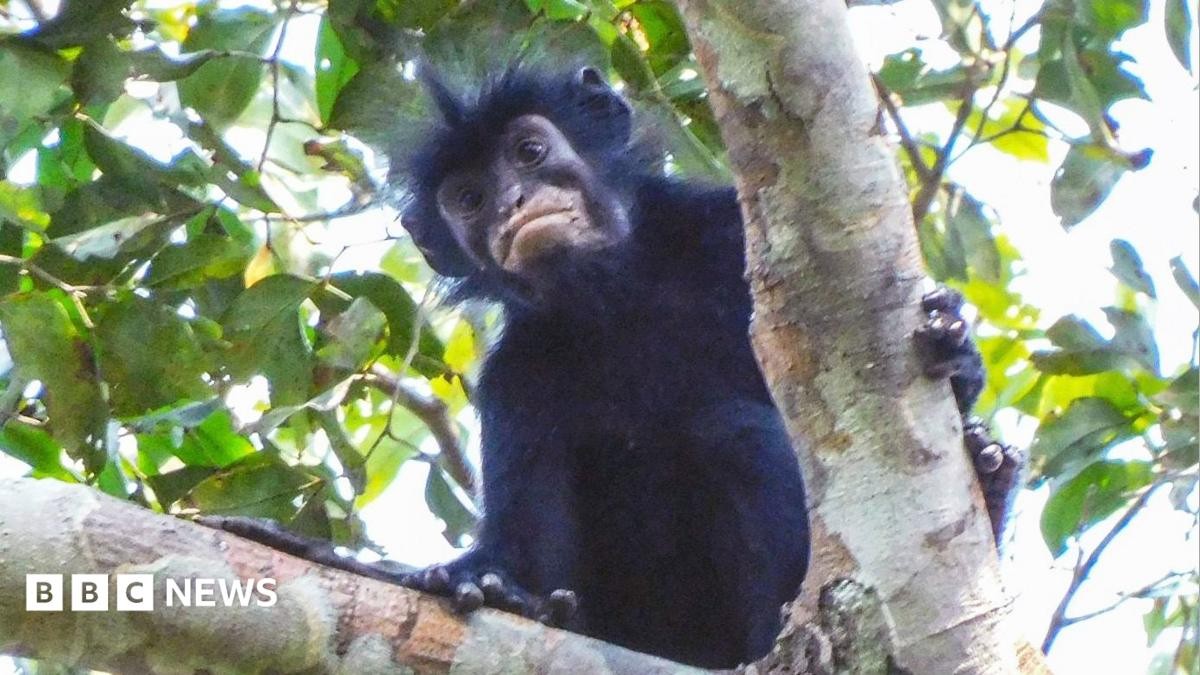
Orange lips. A black face. A secret kept in the high canopy of the Democratic Republic of the Congo for far too long.
Scientists have confirmed what locals already knew in whispers. A monkey lives there, distinct and genetically unique. It wasn’t until now, though, that it became official.
The primate is hiding. Literally. Tucked away in the dense, tangled roofs of Lomami National Park’s central-east forests, it avoids the eye of man. Conservationists first glimpsed this strange creature in 2008 but managed only a blurry snapshot. A ghost in the lens.
Ten years passed. Silence, then another sighting. An international team went to ground. They found it. And they proved it’s a new species.
Think about that. Five hundred and fifty years. Only five African monkey species have joined the roster of science since 1950.
“Discovering” a species doesn’t mean the world was blind. It means science finally caught up to evolution.
Junior Amboko led the hunt. A PhD student from Florida Atlantic University who didn’t just look. He listened. Audio recordings, photography, genetic sequencing. The toolkit of modern zoology, deployed in thick tropical humidity.
He called it an amazing feeling to stare into the face of something so few knew existed.
But the monkeys are shy. Arrogantly so. They stay up high. Amboko visited fifty-two villages. Fifty-two. And people in only eight claimed to have ever seen a Likweli, the local name. The other forty-four villages had no idea they lived in the same forest as it.
The team named it Colobus congoensis. A nod to the natural chaos of its home. It joins the colobus clan, a group Prof Kate Detwiler points out has a rather distinct biological quirk.
They lack thumbs.
How do they hang on? Well. That’s just how they survive. We mapped the DNA, named the orange-lipped stranger, and published it in PLoS One.
Now the secret is out. But the monkey remains hidden.