Archaeologists in Turkey dug into history. What they pulled out was unexpected. Two premature infants. Buried side by side. In an abandoned toilet.
It sounds grim. It wasn’t meant to be disrespectful. It was an act of care. A complex one.
The site is near the Temple of Artemis in Ephesus. One of the Seven Wonders. The grave dates back about 1,200 years. That places it in the middle Byzantine era, roughly the eighth or ninth century.
Lilli Zabrana and Caroline Partiot from the Austrian Academy of Sciences published these findings. They wrote for Childhood in the Past. The journal released the study in July.
“This interment was made in an unexpected and unexpected setting,” Zabrana noted.
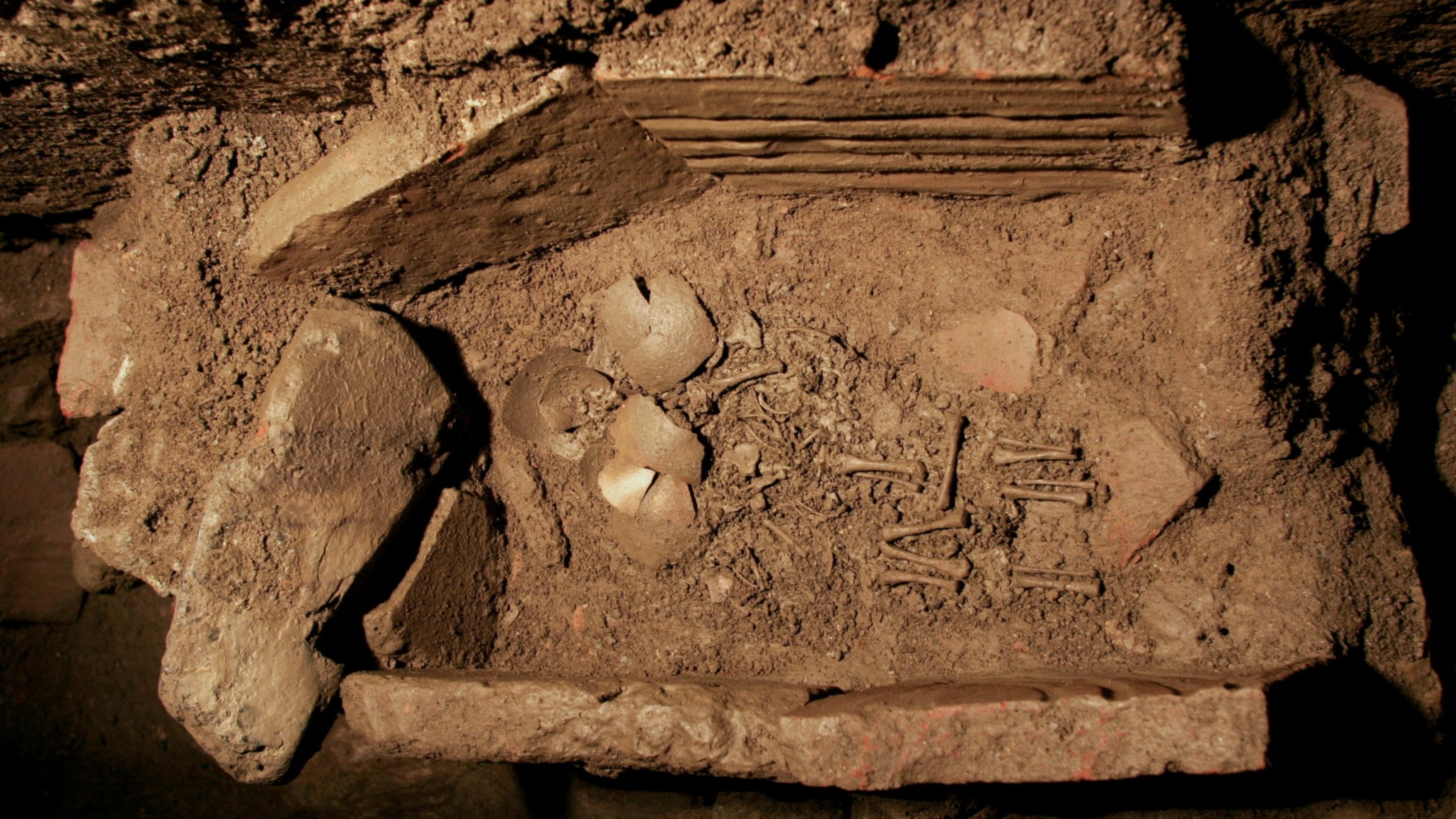
Normal burials went to a specific cemetery outside the temple walls. This one did not. The babies were placed in a stone cist. This cist sat inside an old latrine channel. That channel had been part of a Roman odeum built centuries earlier. An odeum hosted music. Then it became a bathroom. Then it became a tomb.
Why were premature twins buried in an ancient latrine?
Location matters. Why put babies in a former sewage system?
Researchers think it was a compromise. The infants were born too early. About 33 or 34 weeks gestation. That’s roughly seven and a half months. Full term is closer to forty.
Because they died so young, they likely weren’t baptized. In the middle Byzantine period, baptism was important for Christian burial rites. Without it, the body might not qualify for the sacred cemetery.
But leaving them exposed was unthinkable. The stone-lined cist protected the remains. It preserved them for over a millennium. This suggests the family wanted to honor the children. They acknowledged the infants’ place in the community. Even if that place was outside the main gates.
It was a practical solution. A middle ground between religious rules and local customs.
Which infant had a rare genetic marker?
Here is the medical twist. The skeletons showed no trauma. No signs of disease. One infant, however, had a structural anomaly.
A supernumerary cervical rib.
This is an extra rib. It forms near the base of the skull. Only about one percent of people have it. Usually, it causes no problems. It is just a quirk of bone growth.
But in embryos, it tells a different story.
Partiot linked the extra rib to issues with Hox genes. These genes control how body parts form during development. When they misfire, the results can be severe. Stillbirth. Prematurity. Sudden infant death.
Finding this trait in a twin burial is new. The researchers noted they had never seen twins with cervical ribs documented in archaeology before.
Were they twins? The evidence points to yes. The bones are similar in age. The bodies lie in direct contact. But science requires DNA to confirm. Future analysis might settle that debate.
Where exactly was this Ephesus infant grave located?
The geography is layered.
The Temple of Artemis was built around 550 B.C.E. The Roman odeum came first century C.E. The latrine was added in the second or third century. The burial happened in the eighth or ninth century.
Each layer added complexity. The latrine was abandoned by the time the graves were dug. The family reused the space. It was accessible. It was secluded. It kept the bodies safe from scavengers and time.
The mothers? They are missing from the record. No female skeleton was found nearby.
Maternal mortality was high. Infant mortality was high. The mother might have died during childbirth. She might have survived. The archaeologists can’t say for sure. Both outcomes were common in that era.
The focus remains on the infants. Their preservation is remarkable. The stone cist did its job. It held their bones for a thousand years. It allowed us to see the subtle details of their biology.
The burial answers some questions. It raises others. Who were their parents? Why this specific spot? What names did they have?
We may never know. But the stones remember.